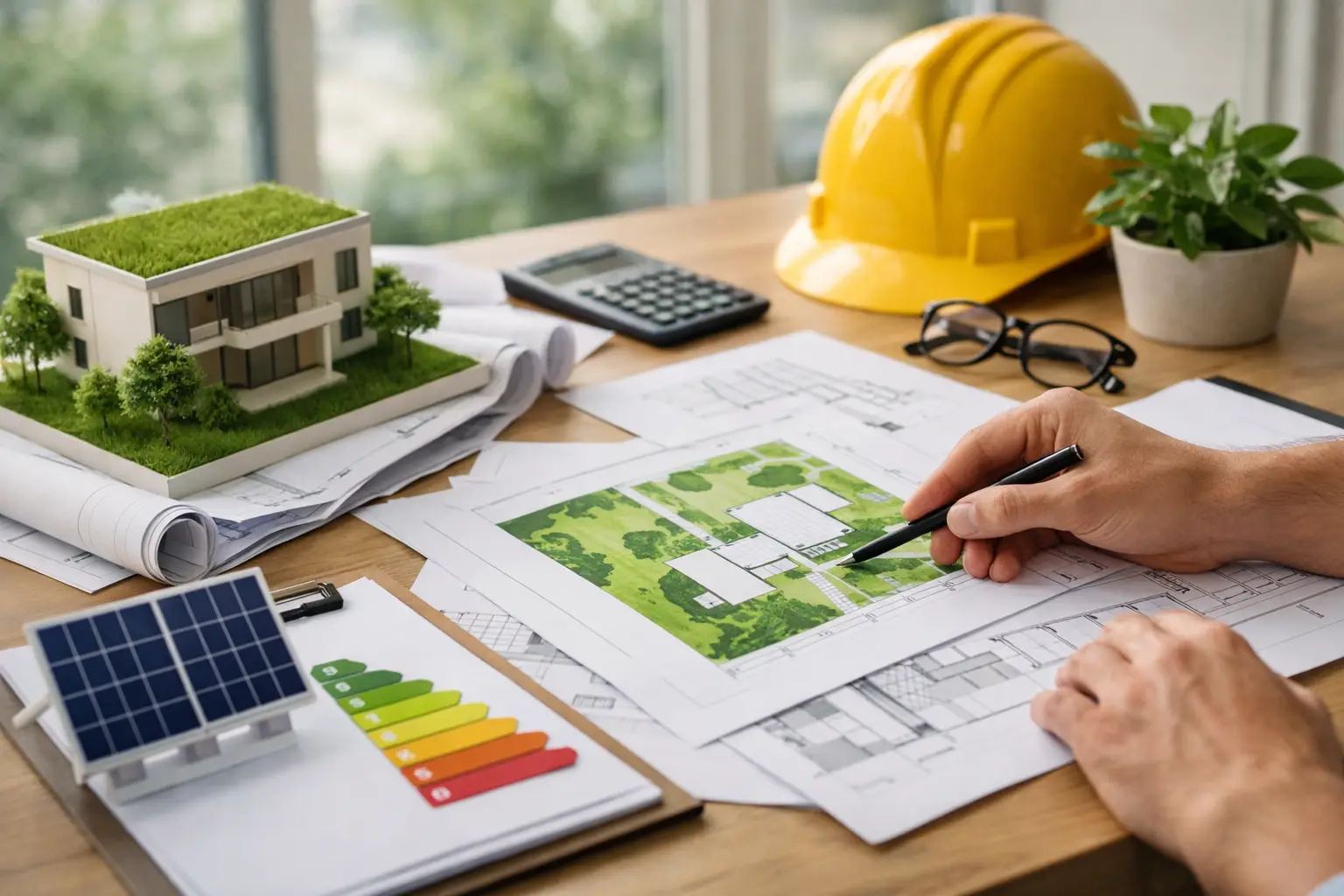
If you are asking what are green building documents, you are probably already somewhere in the permit process and have run into a requirement that was not on your original checklist. That happens often with residential projects. A homeowner is planning an addition, ADU, garage conversion, or new home, and then a city, county, or energy consultant mentions green compliance forms, supporting notes, or verification paperwork.
The short answer is this: green building documents are the plans, notes, calculations, checklists, and verification forms that show a project meets applicable sustainability and energy-related building requirements. They are not one single document. They are a package of supporting materials tied to code compliance, and what is required depends on the project scope, the local jurisdiction, and the version of the code being enforced.
What are green building documents in residential construction?
In residential construction, green building documents usually refer to anything submitted to prove the project complies with mandatory environmental and efficiency standards. In California, that often means documents connected to the California Green Building Standards Code, commonly called CALGreen, along with energy compliance documentation and related plan notes.
For a homeowner or contractor, this matters because green requirements are not separate from the permit process. They are built into it. If your plans do not show the required compliance information clearly, plan check can stall, corrections can pile up, and the approval timeline gets longer than it needs to be.
These documents can appear in several places. Some requirements are shown directly on the architectural sheets. Others come as supporting reports or forms prepared by a third party, such as an energy consultant, HERS rater, engineer, or other project professional. The exact mix changes from project to project.
Why green building documents matter for permits
A lot of owners assume green compliance is mostly about optional upgrades. That is not usually how the permit office sees it. For most residential projects, at least some green and energy provisions are mandatory. The building department wants a clear record showing that your submitted design can be reviewed against current code.
That means green building documents serve two jobs at once. First, they help the jurisdiction confirm that the proposed work meets code. Second, they guide the contractor and inspectors during construction so the approved plans match what gets built in the field.
If those documents are vague, incomplete, or inconsistent with the rest of the drawing set, the project can run into avoidable friction. A missing note about construction waste management, low-flow plumbing fixtures, or duct sealing may sound minor, but in permit review, small omissions often trigger larger correction cycles.
What is usually included in green building documents?
The answer depends on the job, but most residential green building document packages include a combination of code notes, product or performance information, and verification paperwork.
One common component is green code notes on the plans. These notes may address water-conserving fixtures, moisture control, material requirements, exhaust fan performance, and construction waste reduction. Some jurisdictions expect these notes in a very specific format, while others are more flexible as long as the required content is present.
Energy compliance documents are another major piece. In California, residential permit sets often include Title 24 energy forms that show how the building envelope, lighting, HVAC system, windows, insulation, and other features comply with the state energy code. Even when people do not think of these forms as green building documents, they are closely related in practice because they support the broader compliance package.
There may also be supporting details for solar readiness, electric vehicle readiness, ventilation, or other code-driven requirements. On some projects, especially larger or more complex ones, third-party verification documents are needed before final sign-off. That can include HERS verification for certain systems or installation elements.
For projects involving demolition or substantial construction work, the jurisdiction may also require documentation tied to waste handling or recycling. Again, this is not always a standalone form. Sometimes it is a note on the plans, and sometimes it is part of a separate local requirement.
What are green building documents not?
It helps to clear up one common misunderstanding. Green building documents are not just marketing materials for an energy-efficient home. They are not there to make the project sound sustainable. They are there to document compliance.
They are also not always a big, specialized certification package. Some owners hear the phrase and assume they need a formal green certification program. For most standard residential permits, that is not the case. Mandatory code compliance and voluntary green certification are different things.
A city may require CALGreen notes, energy forms, and specific construction details. That does not mean the house is being submitted for a private certification label. It simply means the permit set has to meet the adopted code.
When are green building documents required?
They are most commonly required when your project needs building permits for new construction, additions, conversions, major remodels, or system upgrades that trigger current code provisions. A small repair may not involve much green documentation. A new ADU almost certainly will.
This is where scope matters. A full custom home, an attached addition, and a garage conversion may all require green compliance documentation, but not necessarily the same level or type. The plans for a new home will usually carry a broader compliance burden than a smaller alteration. At the same time, even a modest residential project can still trigger energy forms, green notes, and specific field verification requirements.
Local interpretation matters too. Two jurisdictions applying the same state code may ask for the information to be presented differently. That is one reason permit-ready residential drafting is not just about drawing walls and dimensions. The plans have to match the approval expectations of the jurisdiction reviewing them.
How green building documents fit into a permit set
A well-prepared permit set treats green compliance as part of the core package, not an afterthought. That means the site plan, floor plans, elevations, sections, notes, and supporting forms should all work together.
For example, if the energy documents call for specific window performance values, those values should align with the windows shown on the plans. If the green notes call for whole-house ventilation or high-efficacy lighting, the mechanical and electrical information should not conflict with that. Reviewers notice when one document says one thing and another says something else.
This coordination is where many delays begin. A project can have all the right forms in theory but still fail plan review because the forms and drawings do not tell the same story. Good planning work closes those gaps before submittal.
Common problems homeowners and contractors run into
The first problem is assuming the building department will sort it out for you. They will not. Their role is to review what is submitted, issue corrections if needed, and approve the project once the package complies.
The second problem is treating green building documents as separate from design decisions. If a project starts with incomplete assumptions about insulation, fenestration, HVAC equipment, or water fixture requirements, the compliance paperwork often has to be redone later. That creates unnecessary back-and-forth.
The third problem is relying on generic notes copied from another project. Code cycles change. Local expectations vary. What worked on one permit in one city may not satisfy another reviewer, even if the projects seem similar.
For homeowners, this often feels like the process is overly technical. For contractors, it can feel like paperwork is slowing down practical work. Both reactions are understandable. The reality is that accurate green building documents save time when they are handled early and coordinated correctly.
Do all projects need the same green documentation?
No, and this is where a lot of confusion comes from. The right answer is usually, it depends on the scope, occupancy, location, and permit type.
A simple remodel may need basic code notes and limited compliance support. An ADU or new home may need a much more developed package, including energy calculations and field verification steps. A garage conversion can look simple on paper but still trigger meaningful compliance requirements because conditioned space is being created or altered.
That is why project-specific guidance matters. A one-size-fits-all answer tends to create either overkill or missing documentation, and neither one helps the permit timeline.
The practical takeaway for permit applicants
If you are early in planning, the best time to address green building documents is before the permit package is assembled, not after corrections come back. The goal is to build compliance into the plans from the start so the submittal is clear, coordinated, and easier for the jurisdiction to review.
For homeowners, that means asking early what code notes, energy forms, and verification items are likely to apply to your project. For contractors, it means making sure your drafting and permit support team understands not only how to draw the project but how to prepare it for real-world plan check.
That is especially true in California, where residential permit requirements can be detailed and jurisdiction expectations can vary from one city or county to the next. A clean permit package is not just about design intent. It is about reducing approval delays and keeping construction moving once the permit is issued.
Green building documents are really proof that your project is ready to be reviewed against current standards. When they are handled correctly, they stop being a mystery and start doing what they are supposed to do – helping your plans move forward with fewer surprises.