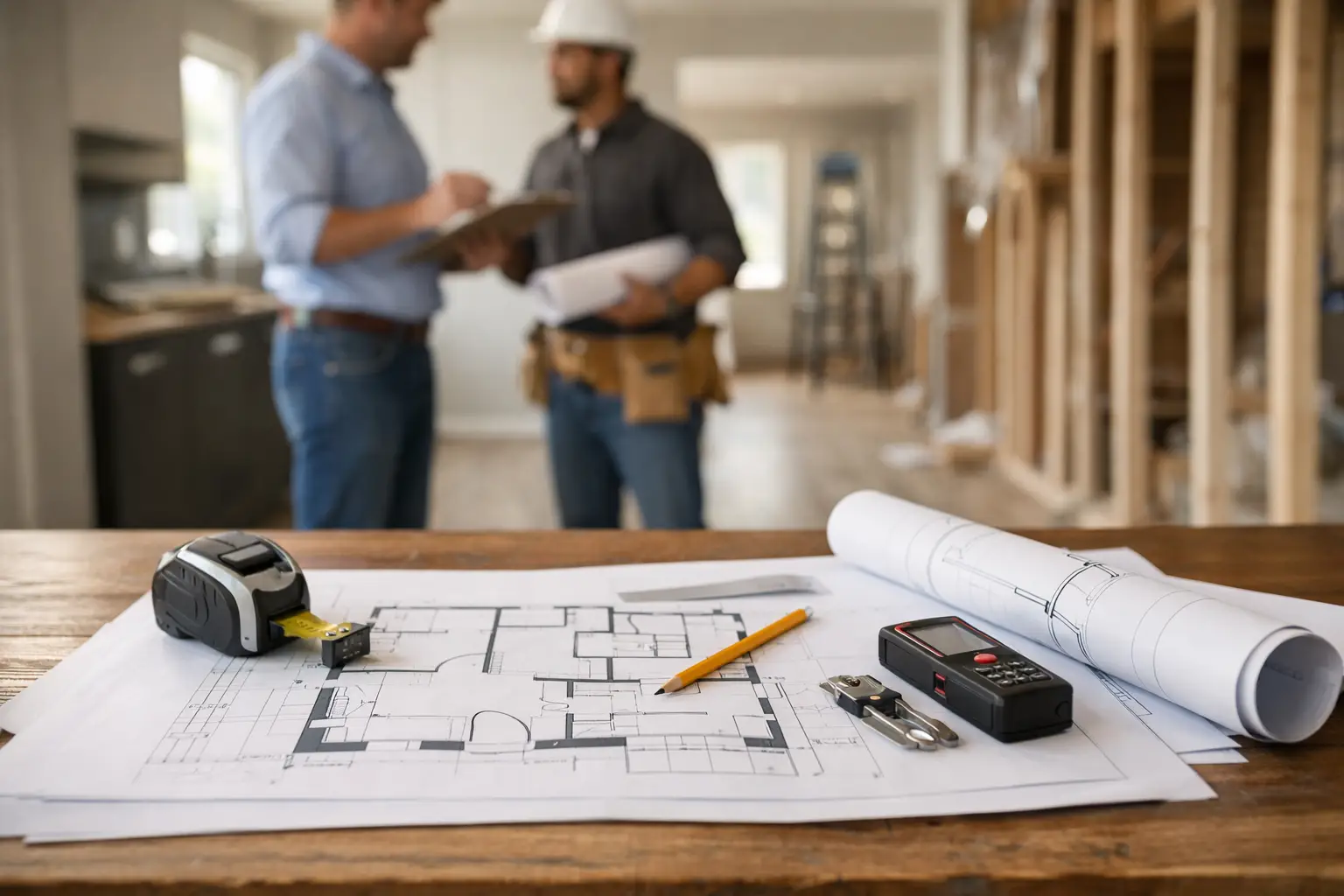
A remodel can go off track before demolition even starts. The problem is usually not the new design. It is the lack of a reliable picture of what is already there. As-built plans are the starting point for remodels and additions because they document the existing home before new work is designed, priced, engineered, and submitted for permit.
That matters more than most owners expect. A room addition, garage conversion, kitchen remodel, or ADU connection to an existing house all depend on real conditions, not assumptions. If the base information is wrong, the design can be wrong, the permit set can be delayed, and the construction budget can start slipping before the project is even approved.
Why as-built plans are the starting point for remodels and additions
An as-built plan is a measured drawing of the home as it exists today. It typically includes floor plans, dimensions, wall locations, doors, windows, ceiling heights, and other visible features that affect design and code review. Depending on the project, it may also note roof forms, exterior elevations, site relationships, and existing structural elements.
For remodels and additions, this is not a nice extra. It is the base layer for everything that follows. Designers need it to create a workable layout. Engineers need it to understand how new loads may interact with existing framing. Contractors need it to price labor and materials with fewer unknowns. Building departments need clear documentation that shows existing conditions and proposed changes.
Without that baseline, everyone starts filling in gaps. That is when mistakes become expensive.
Existing conditions drive the design
A homeowner may say, “We want to open this wall, extend the back of the house, and add a bedroom.” That sounds straightforward until the actual conditions are measured. The wall may not align cleanly with the roof structure. The existing foundation may step down. Window setbacks may limit where openings can go. Ceiling heights may affect energy compliance or required details.
Good design does not happen in a vacuum. It responds to what is already built. That is why accurate as-built plans often save time even though they add a step at the beginning. They prevent the design from heading in a direction that the house, the lot, or the code will not support.
This is especially true in older homes, homes that have been altered over time, or properties where prior work was done without thorough documentation. In those cases, even the original plans, if they exist, may not match the house as it stands now.
Original plans are not always enough
Owners are often relieved when they find a copy of old plans. Sometimes those plans are useful. Sometimes they are outdated the moment you compare them to the structure.
Field changes happen during construction. Previous owners move walls, enclose patios, replace windows, or alter plumbing and electrical layouts. Over the years, the house evolves. A permit reviewer or contractor cannot rely on a decades-old drawing if the current structure says something different.
That is where as-built documentation becomes practical, not theoretical. It verifies the conditions that will actually affect the new work.
As-built plans reduce permit problems
Permit review moves faster when the submitted plans clearly distinguish existing conditions from proposed changes. Reviewers want to understand what stays, what goes, and how the new work connects to the existing structure. If the underlying drawings are vague or inaccurate, corrections are more likely.
Those corrections can seem small on paper, but they often create real delays. A plan checker may ask for revised dimensions, clearer wall information, updated elevations, or additional structural coordination. When that happens, the project loses momentum and the owner has to wait longer for approval.
In California jurisdictions, where local review standards can be specific and code compliance is closely checked, clarity matters. A complete set starts with a dependable record of existing conditions. That does not guarantee zero comments, but it puts the project on much stronger footing.
The permit set needs a clear before-and-after story
For additions and remodels, permit drawings are not just about the finished idea. They need to tell a before-and-after story. The existing home must be shown accurately so the reviewer can evaluate how the proposed work affects structure, life safety, energy compliance, egress, setbacks, and more.
If the existing plan is weak, the proposed plan is harder to trust. That is one reason experienced planning and permit professionals insist on getting the base information right before moving into revisions and submittal.
Accurate plans help contractors price work more realistically
Contractors deal with uncertainty every day, but they should not have to guess at basic dimensions or conditions. When bids are based on rough sketches or verbal descriptions, there is more room for missed scope, change orders, and disputes later.
As-built plans help create a cleaner handoff between concept and construction. They give contractors a better sense of square footage, framing relationships, demolition scope, and tie-in conditions. That usually leads to more realistic pricing and fewer surprises once work begins.
This does not mean every hidden issue will be discovered in advance. Once walls are opened, new information can still appear. But there is a big difference between a hidden condition and a preventable documentation gap. The first is part of construction risk. The second is avoidable.
Remodels and additions have more unknowns than new construction
New construction starts on a relatively clean sheet. Remodels and additions do not. They have to work with existing framing, rooflines, floor levels, utility locations, and property constraints. That creates more points where design intent and field reality can clash.
Because of that, remodel planning requires discipline at the front end. Taking measurements, documenting the structure, and building the design from actual conditions is often the difference between a coordinated project and a frustrating one.
There is also a budget reason for this. Owners often focus on visible upgrades such as finishes, cabinetry, or added square footage. Those matter, but the money can disappear quickly when the plans fail to account for what is already there. Reframing a misjudged roof connection or revising approved plans after a field discovery costs more than getting the as-built work done early.
When as-built plans matter even more
Some projects can tolerate a little uncertainty better than others. A simple interior refresh may not need the same level of documentation as a major reconfiguration. But for many residential projects, accurate as-builts are especially important.
That includes room additions, second-story additions, garage conversions, ADUs connected to existing structures, whole-house remodels, and projects involving structural wall removal. It also matters when the property has been modified over time or when owners are unsure what past work was permitted.
In those situations, skipping the as-built phase tends to create false savings. The project may feel like it is moving faster, but it is usually just pushing risk downstream.
What a good as-built process should provide
A good as-built process should do more than collect measurements. It should produce clear, usable documentation that supports the next steps. That means the drawings need to be organized, consistent, and prepared with the permit and construction process in mind.
For homeowners, the benefit is confidence. You know the design is being developed from the real house, not from estimates. For contractors, it creates a more reliable starting point for scope, coordination, and pricing. For permit review, it helps present a complete and credible plan set.
At JDFales Plans & Permits, that practical mindset is the point. The goal is not just to draw what exists, but to turn existing conditions into permit-ready documentation that supports a smoother path forward.
The smartest place to slow down is the beginning
Most project delays are blamed on the city, the contractor, or changing decisions. Sometimes those are the cause. But many delays start earlier, when a project moves into design without a clear record of the existing structure.
That is why as-built plans are the starting point for remodels and additions. They bring clarity to decisions that affect layout, engineering, permit review, and construction cost. They do not remove every unknown, because remodel work always carries some level of discovery. What they do is replace avoidable guesswork with something far more useful: a measured, documented foundation for the work ahead.
If you are planning to change a home, add space, or tie new construction into an existing structure, the smartest first move is often the least flashy one. Start with what is really there, and the rest of the project has a much better chance of going the way it should.