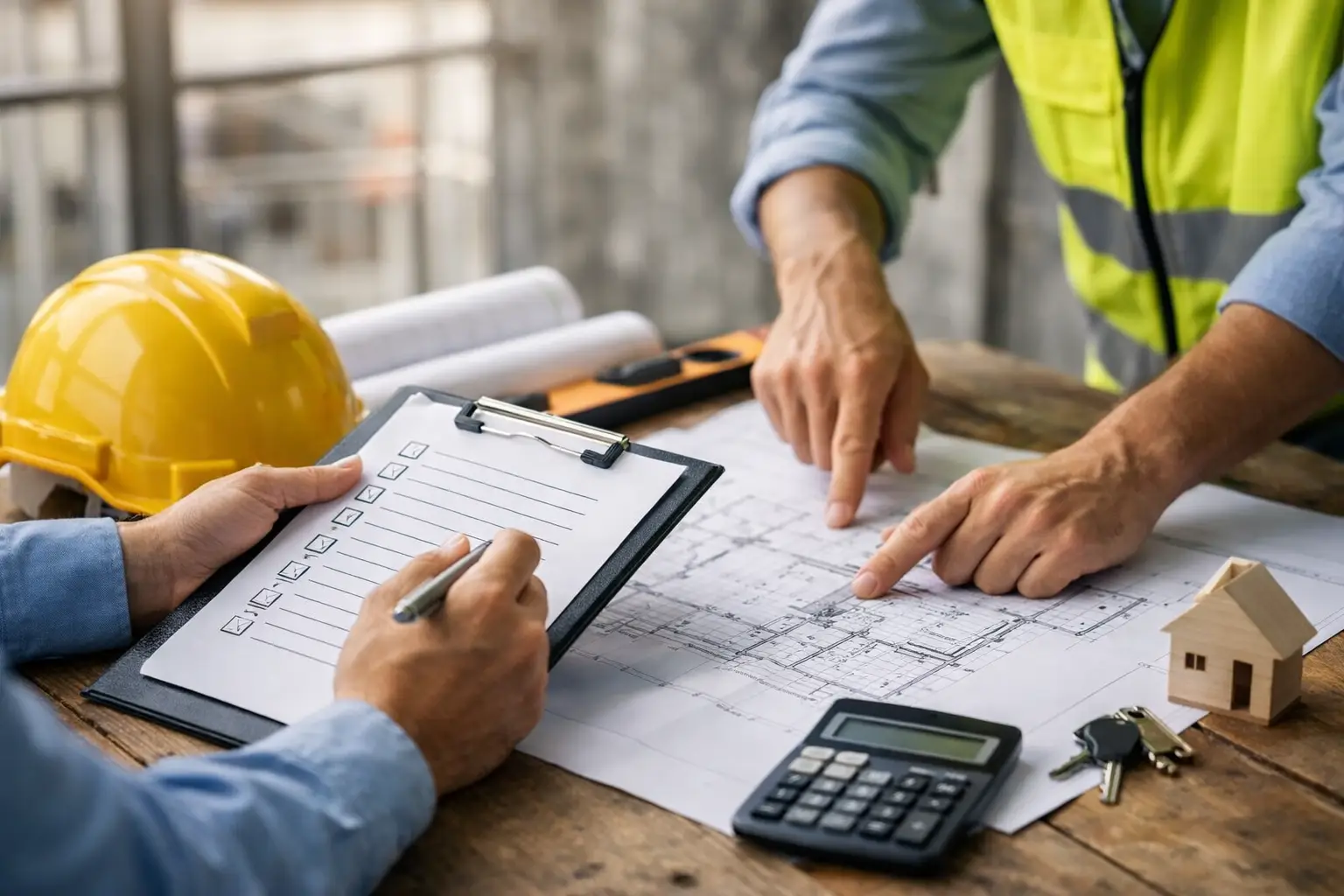
A residential project usually does not go off track because of one big dramatic failure. More often, it starts with a missing note on the plans, an incorrect assumption about setbacks, a utility conflict no one checked, or a budget built around incomplete information. That is exactly why a pre-construction checklist and mistake-prevention post matters. It gives homeowners and contractors a way to catch preventable problems before they turn into delays, redesign costs, and permit corrections.
For ADUs, additions, garage conversions, remodels, and custom homes, the work that happens before construction starts often determines how smooth the rest of the job will be. If the planning phase is rushed, the field usually pays for it later. If the planning is clear, realistic, and permit-ready, the project has a much better chance of moving forward with fewer surprises.
Why a pre-construction checklist and mistake-prevention post saves time
The point of a checklist is not paperwork for the sake of paperwork. It is to reduce risk. In residential construction, risk usually shows up in three places: approvals, buildability, and communication.
Approvals become a problem when plans do not match local requirements, required notes are missing, or the project scope triggers code issues that were not addressed early. Buildability becomes a problem when the drawings look fine on paper but do not reflect existing site conditions, utility locations, structural needs, or realistic sequencing. Communication becomes a problem when the owner, designer, contractor, and permit counter are all working from slightly different assumptions.
A good pre-construction review closes those gaps before money starts moving quickly.
Start with scope before drawings
Many project issues begin before the first formal plan set is even created. Homeowners often know what they want in general terms, but permit review does not happen in general terms. It happens based on exact square footage, occupancy, setbacks, fire separation, access, utility connections, structural modifications, and energy compliance where required.
That means the first step is defining scope with precision. Is the garage conversion creating conditioned living space? Will the addition affect lot coverage? Is the ADU detached or attached? Are you modifying bearing walls during a remodel? Does the project trigger accessibility, fire sprinkler, or utility upgrade questions?
These are not minor details. They shape the entire path of the project. If scope is vague, drawings tend to be revised multiple times. If scope is clear from the start, the plans can be built around the real approval path.
Check jurisdiction requirements early
One of the most common mistakes in residential planning is assuming one city or county handles projects the same way another one does. They do not. Even when the building code basis is similar, local interpretation, submittal standards, and planning requirements can differ enough to slow a project down.
Before plans are finalized, confirm what the local jurisdiction expects. That includes zoning standards, setback rules, height limits, lot coverage limits, parking rules if applicable, utility requirements, and submittal checklists. In California, this is especially important because state housing laws may affect ADUs and conversions, but local procedures still shape the review process.
This is also where many owners lose time by relying on old advice from a previous project or a neighbor’s experience. Permit approval depends on current conditions, current code application, and the specifics of your property.
Existing conditions need to be real, not assumed
A large share of field problems can be traced back to inaccurate existing information. If the plans are based on rough dimensions, incomplete site measurements, or assumptions about framing and utilities, the construction team may discover conflicts only after demolition or layout begins.
A strong pre-construction process verifies the site. That means accurate measurements, a realistic understanding of grade and drainage, utility locations, existing structural conditions where relevant, and any features that may affect setbacks or access. On remodels and additions, existing conditions matter just as much as the new work.
This is where experience counts. Someone with field knowledge tends to notice practical issues that can be missed in a purely drafting-based process, such as framing conflicts, head height concerns, or utility reroutes that affect both permit plans and budget.
Make sure the plan set is permit-ready, not just concept-ready
There is a major difference between a drawing that helps people visualize a project and a drawing package that can move through plan check. A concept drawing may be enough to discuss ideas. It is not enough to answer code questions, coordinate disciplines, or support a smoother permit review.
Before submittal, review whether the plan set clearly communicates the full scope of work. That usually means the site plan, floor plans, elevations, sections, construction details, notes, and code-related information all need to align. If structural or energy documentation is required, that coordination should happen before filing rather than after correction comments come back.
One mistake that causes avoidable delay is submitting too early just to get the process started. Sometimes speed helps. Sometimes it creates more rounds of corrections than necessary. It depends on the jurisdiction and the quality of the plans. In most cases, complete and coordinated documents save more time than rushed submittals.
Budget for the project you are actually building
Another common issue is a budget that reflects a wish list rather than the permitted scope. Owners may plan around a rough construction number without accounting for plan revisions, engineering, permit fees, utility work, title or consultant documents, or site-specific upgrades.
Contractors can run into a similar problem when they price from incomplete plans. The result is not just a tighter budget. It is change orders, pauses, and frustration once the real scope becomes clearer.
A practical pre-construction check asks whether the budget matches the documents, site conditions, and approval requirements. If it does not, it is better to adjust expectations early than to redesign under pressure after permits are underway.
Clarify responsibilities before work begins
Residential projects often involve more handoffs than people expect. The owner assumes the contractor will handle something. The contractor assumes the designer covered it. The permit agency asks for a correction, and no one is sure who is responsible for responding.
That confusion is preventable.
Before construction starts, define who is handling plan updates, permit responses, consultant coordination, product selections that affect compliance, and communication with the jurisdiction. For owner-builders, this step matters even more because responsibilities that would normally sit with a contractor may fall directly on the homeowner.
Clear responsibility does not just keep the schedule cleaner. It also reduces costly standstill moments when the next step is obvious to no one.
Common mistakes this checklist helps prevent
A useful mistake-prevention review catches patterns that show up again and again. In residential work, those patterns are familiar.
One is designing first and checking zoning second. Another is assuming the existing structure can accept modifications without additional structural review. Another is missing the fact that a utility upgrade, fire requirement, or drainage issue will affect both approval and cost. And one of the most expensive mistakes is starting demolition or construction activity before the permit path is truly clear.
There is also a softer mistake that causes real damage: treating pre-construction as a delay instead of part of the build. When that happens, owners push for speed in the wrong place. They move too fast through planning, then wait much longer in corrections, redesign, or field fixes.
The best checklist is specific to the project
Not every project needs the same level of pre-construction review. A simple interior remodel and a detached ADU do not carry the same permit questions. A garage conversion has different code and site concerns than a new custom home. That is why generic checklists only go so far.
The most useful approach is a checklist built around the actual project type, jurisdiction, and property constraints. That may include planning review items, permit documentation, structural coordination, utility verification, title or parcel questions, and sequencing concerns tied to the site.
For homeowners, this kind of guidance removes guesswork. For contractors, it creates a cleaner path from estimating to permit to construction. For both, it reduces the chance that the first real review of the project happens after money has already been spent in the field.
At JDFales Plans & Permits, that is where good planning earns its value. Not in abstract terms, but in fewer corrections, clearer drawings, and a project team that starts with better information.
If you are still early in the process, that is an advantage. The best time to prevent construction mistakes is before they become construction problems.