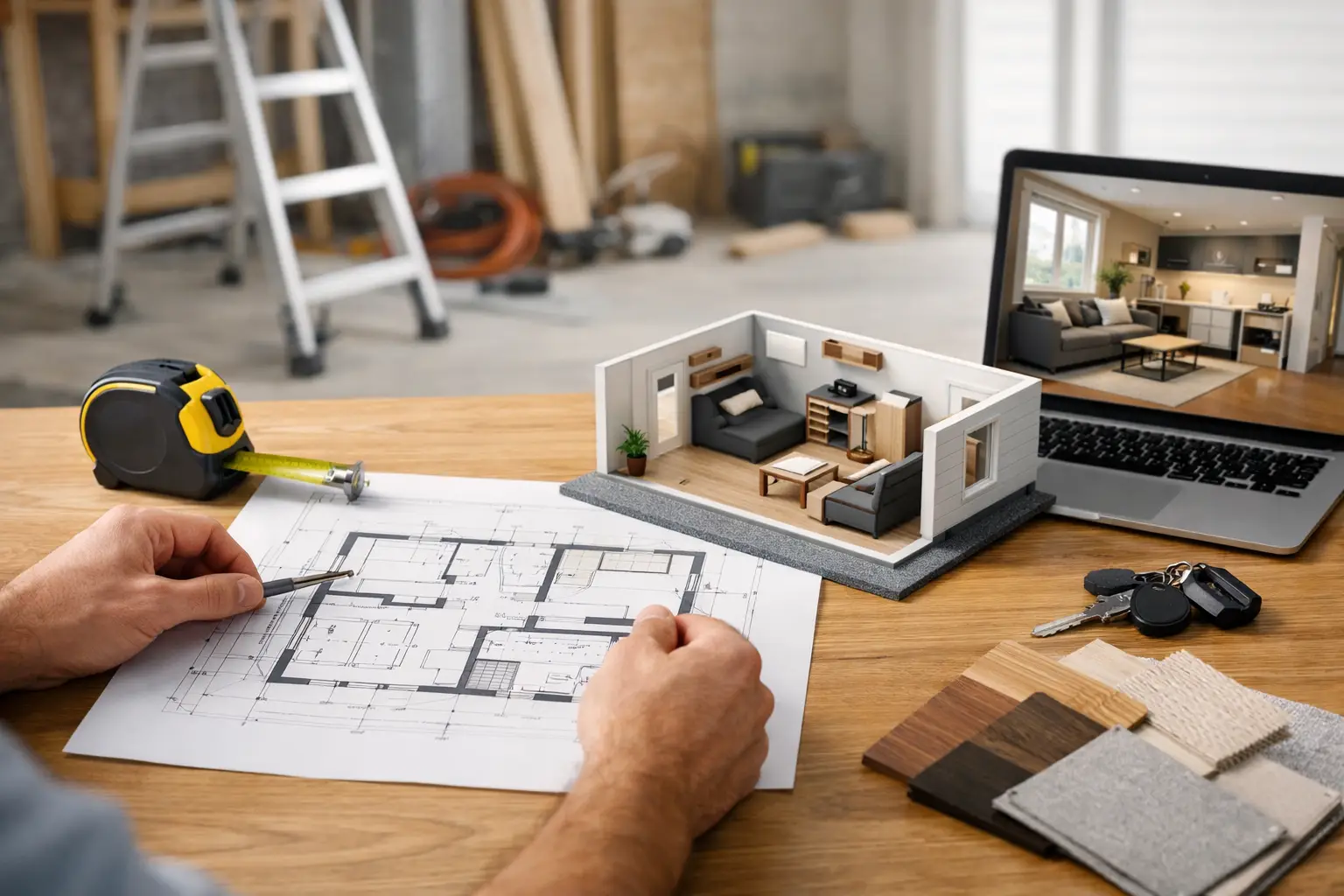
A garage conversion usually looks simple from the driveway. The door is already there, the walls are already standing, and the square footage feels like space you should be able to use. Then the real questions start. Can the existing slab work? Will the city treat it like conditioned living space? Do you need parking replacement? That is where knowing how to plan garage conversion work the right way saves time, money, and plan-check frustration.
The biggest mistake homeowners make is treating a garage conversion like a finish project instead of a change-of-use project. Once you convert a garage into habitable space, you are no longer just adding drywall and flooring. You are changing how that area is legally used, and that pulls in building code, energy requirements, safety standards, and local zoning rules. If you start with that mindset, your decisions get much clearer.
How to plan garage conversion with the end use in mind
Before anyone measures walls or sketches a layout, define what the converted space needs to be. A guest room, home office, rental unit, family room, or bedroom with bath can all fit inside the same garage shell, but they trigger very different planning issues. A simple conditioned room may be more straightforward than a full accessory dwelling unit. Adding a bathroom or kitchenette changes plumbing, venting, electrical demand, and sometimes fire separation requirements.
This is also where budget expectations need to be honest. A garage conversion can cost less than a full addition because the structure already exists, but it is not always the bargain people expect. Older garages often have shallow foundations, uninsulated walls, low ceiling heights, undersized electrical service, or slabs that slope toward the garage door. Each one of those conditions can be solved, but each adds scope.
If the goal is rental income or multigenerational housing, plan for durability and compliance from day one. If the goal is flexible family space, your layout options may be broader. The intended use drives the permit path, so it should be settled early.
Start with the site and existing conditions
A solid plan begins with a real assessment of what is already there. That means measuring the garage accurately, checking ceiling heights, identifying bearing walls, locating utilities, and understanding how the roof and framing are built. In many California homes, garages were built to a different standard than the main house. That matters when you try to bring them into habitable use.
The slab is one of the first things to evaluate. Garage floors are often lower than the house floor and sometimes sloped. That is useful for parking a car, but not ideal for a living area. Depending on the condition and the local requirements, the solution could be a raised floor system, slab correction, or another approved approach. There is no one-size-fits-all answer.
Windows and natural light also come up early. A garage may have very limited glazing, and habitable rooms require proper light, ventilation, and emergency egress where applicable. That means wall openings may need to change. Once you start changing openings, structural detailing may follow.
Check zoning and local permit rules before designing too far
This is the step people try to skip, and it often causes the biggest delays. Even if a garage conversion seems common in your neighborhood, your property still has to meet current local rules. Jurisdictions may regulate setbacks, lot coverage, parking replacement, occupancy type, utility connections, or whether the project qualifies as a garage conversion versus an ADU.
In California, state law has opened up more paths for housing and garage conversions, but local interpretation still matters. One city may be straightforward while another may have very specific submittal expectations. The permit counter is not the place to discover your project concept does not match the applicable path.
This is why experienced planning support matters. Permit-ready drawings are only useful if they align with the actual review standards of the local building department. A clean set of plans can still get bounced back if the project was framed around the wrong assumptions.
Build the layout around code, not just convenience
When homeowners think about layout, they usually think about furniture placement and function. In permit planning, layout also has to satisfy minimum room dimensions, ceiling height, light and ventilation, safety glazing, smoke and carbon monoxide alarms, and means of egress. Bathrooms and kitchens add another layer because fixture clearances, plumbing walls, exhaust, and service connections all need to work inside a limited footprint.
This is where garage conversions can become either efficient or expensive. A layout that keeps plumbing near existing utility lines will usually be simpler than one that relocates everything across the room. A design that works with existing framing will usually move faster than one that requires major structural modifications. Good planning is not just about fitting the use into the space. It is about reducing avoidable complexity.
If you are converting an attached garage, separation from the main house and any remaining garage area needs careful review. If you are converting a detached garage, access, utilities, and site conditions may become the bigger issue. The right layout depends on which constraints are driving the project.
Budget for hidden upgrades, not just visible construction
A realistic garage conversion budget accounts for more than finishes and fixtures. The hard costs often start behind the walls. Insulation upgrades, new windows, HVAC extension or a ductless system, panel upgrades, plumbing trenching, structural revisions, and title or energy documentation can all affect the final number.
Permit fees and plan preparation should also be part of the early budget conversation. Too many projects start with a rough contractor number that excludes the cost of drawings, engineering, energy forms, or corrections during plan check. Those are real project costs, and planning for them up front helps avoid stalled projects later.
There is also a timing budget, not just a dollar budget. If you need the new space by a certain date, build in time for drafting, revisions, submittal, city comments, and resubmittals. Approval timelines vary by jurisdiction, and no serious planner should promise that every department moves at the same speed.
How to plan garage conversion documents for permit approval
A good permit package answers questions before the city has to ask them. That usually means a complete set of measured existing conditions, proposed floor plans, elevations if exterior changes are involved, structural details where needed, energy compliance documents, and any required supporting reports. The drawings should clearly show what is changing, how the new space complies, and how the work connects to the existing home.
Clarity matters just as much as completeness. Plan reviewers are looking for code compliance, but they are also looking for coordination. If the floor plan says one thing, the energy documents say another, and the window schedule says something else, corrections are almost guaranteed.
This is where many homeowners and even some contractors lose momentum. They may have enough information to build the job, but not enough coordinated information to get it approved cleanly. Permit planning is its own skill set. It sits between design intent, field reality, and municipal review standards.
For clients in the Sacramento and Roseville area, this is often where working with a local permit-focused drafting team like JDFales Plans & Permits can reduce friction. The value is not just producing drawings. It is producing a submittal package that reflects how local agencies actually review residential projects.
Expect corrections and plan for them calmly
Even well-prepared submittals can receive comments. That is normal. The key is whether the comments are minor clarifications or signs that the project was poorly framed from the start. If the initial planning was strong, corrections usually become a manageable step instead of a major reset.
The best response is organized and direct. Address each comment, revise the plans clearly, and resubmit with coordination across all sheets and supporting documents. Rushed revisions tend to create second-round problems.
Homeowners often get discouraged here because they assume comments mean the project is in trouble. Usually, they mean the city wants additional clarity or code confirmation. The process moves better when everyone treats comments as part of the approval workflow, not as a surprise attack.
Choose your team based on approval experience
A garage conversion needs more than a good idea and a contractor who can build. It needs planning that reflects permitting reality. Some projects need structural engineering. Some need energy documentation. Some need someone to coordinate the entire package so the owner is not trying to translate city comments alone.
If you are asking how to plan garage conversion work successfully, the practical answer is this: make approval part of the plan from the beginning. Do not wait until after design decisions are locked in to ask whether the city will accept them. The smoother projects are usually the ones where code, layout, budget, and submittal strategy are considered together.
A garage conversion can be one of the smartest ways to add usable living space, but only if the project is planned with clear eyes. The more honest you are about existing conditions, local rules, and permit expectations, the fewer surprises you will face when it is time to move from concept to approved plans.