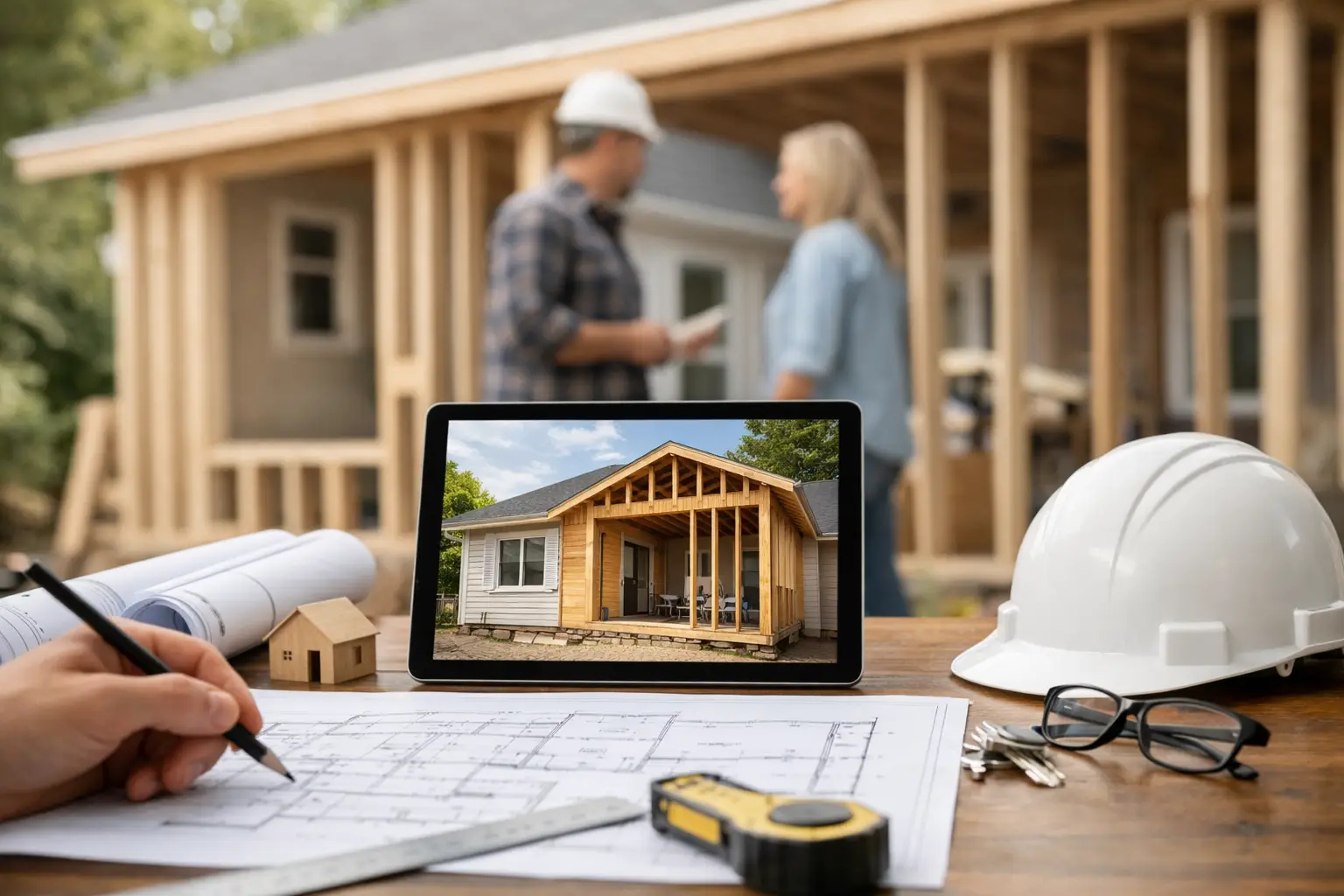
A lot of home additions start with a simple goal – one more bedroom, a larger kitchen footprint, space for aging parents, or a better layout for a growing family. Then the real questions show up fast. Will the lot allow it? Will the city approve it? How much will plans, engineering, and construction actually cost? A solid home addition planning guide should answer those questions before you invest time and money in drawings that cannot be permitted.
The difference between a smooth project and a stalled one usually is not the idea itself. It is the planning behind it. When the early decisions are grounded in zoning, code requirements, site conditions, and a realistic scope, the project moves forward with far less friction.
What a home addition planning guide should do first
Before anyone sketches walls or prices framing lumber, the first job is to confirm whether the addition is feasible on your property. Homeowners often focus on square footage and layout, but local jurisdictions look at setbacks, lot coverage, height limits, fire separation, parking impacts, and how the new space connects to the existing structure.
That is where many projects lose momentum. A homeowner may have a clear vision, but if the lot is already near maximum coverage or the side yard setback is tight, the concept may need to change. In some cases, a second-story addition makes more sense than building outward. In others, a smaller footprint can avoid a much larger structural or permitting problem.
In California, local rules can vary significantly by city and county, even when the state code framework is the same. That means early planning should be tied to the actual approval authority, not general assumptions from a neighbor’s project or a contractor’s past job in a different jurisdiction.
Start with the property, not the floor plan
A good addition begins with the existing conditions. The house, lot, utilities, access, and structural configuration all affect what can be built and what it will cost.
An addition over a slab-on-grade home may involve a different level of coordination than one attached to a raised foundation. A project near easements or utility lines may require added review. If the existing home has older construction, part of the challenge may be how the new work ties into walls, rooflines, and structural elements that were built under earlier code standards.
This is also the stage where honest budgeting matters. Many homeowners price only the visible construction work and overlook planning costs, permit fees, engineering, energy compliance documentation, and plan-check corrections. The result is not just budget strain. It can delay decisions at the point when the project should be moving into submittal.
Budget for the full process, not just the build
If you are planning an addition, think of the budget in layers. There is the design and permit phase, the approval phase, and the construction phase. Each one has its own cost drivers.
The design and permit phase can include as-built measurements, drafting, site plans, structural engineering, Title 24 documentation, and local application requirements. The approval phase can include plan review comments, revisions, and additional documentation requested by the jurisdiction. The construction phase is where labor and materials show up, but by then, expensive changes are harder to absorb.
This is why early scope control matters. A modest addition that is fully coordinated and permit-ready usually performs better than an oversized concept that keeps changing after pricing or review comments come in. Bigger is not always better if it creates structural complexity, utility relocation, or extended review cycles.
Permit-ready plans are where projects gain or lose time
Many people use the phrase “plans” as if all drawings serve the same purpose. They do not. Concept drawings can help visualize the project, but permit-ready plans need to communicate enough detail for plan review and construction.
That means dimensions, existing and proposed conditions, code information, structural coordination where required, and a clear relationship between the addition and the current home. If the new work affects life safety elements, egress, smoke and carbon monoxide alarms, energy compliance, or structural load paths, the plans need to reflect that clearly.
This is one reason permit delays happen so often. The issue is not always that the project is impossible. It is that the submittal package leaves too many gaps. When the plans are incomplete or inconsistent, the city responds with corrections, and every correction cycle adds time.
For homeowners and contractors, this is where an experienced planning and permit partner can make a measurable difference. JDFales Plans & Permits works in this part of the process every day, helping clients move from concept to permit-ready documents with fewer surprises during review.
The approval timeline depends on more than the city
It is easy to blame delays on the jurisdiction, and sometimes review times are long. But the city is only one part of the timeline. The other part is how prepared the project is before it is submitted.
If the scope is still shifting, the site information is incomplete, or key technical items are unresolved, delays are built in from the start. By contrast, a well-coordinated package gives reviewers fewer reasons to pause the project. It also helps contractors bid and build with better clarity.
There is always some “it depends” in permitting. A simple bedroom addition may move differently than a major expansion with structural changes throughout the house. Fire sprinkler requirements, utility upgrades, drainage concerns, or neighborhood overlays can change the path. The goal is not to promise that every addition will be quick. The goal is to remove avoidable problems before they become expensive ones.
Common decisions that affect your home addition planning guide
The most important planning choices are usually made early, when they still feel small. Where the addition attaches to the house affects framing and roof design. Whether plumbing is included changes the level of coordination. Whether you are preserving an occupied living area during construction may influence phasing and access.
Room use matters too. A family room addition may be more straightforward than adding a new primary suite, depending on utility demands and layout changes. Expanding into a side yard may look efficient on paper, but rear-yard placement could create fewer setback issues. A second story may save yard space, but it can introduce more structural and construction complexity.
None of these choices are automatically right or wrong. They need to be weighed against your site, your budget, and your approval path.
How to reduce surprises before submittal
The best way to avoid late-stage problems is to resolve as much as possible before the plans go in for review. That starts with accurate field information and a realistic understanding of what the jurisdiction will want to see.
It also means asking practical questions early. Will the electrical service need to be upgraded? Is the existing foundation configuration going to complicate the tie-in? Will the roofline create drainage issues? Are there existing nonpermitted conditions in the home that could affect the current project once the city reviews the property?
These are not reasons to avoid an addition. They are reasons to plan it correctly. Surprises are common when projects move too quickly from idea to drawings without checking the conditions that drive approvals.
Contractors and homeowners need the same thing: clarity
Homeowners want confidence that the project they are paying for can actually be approved. Contractors want plans they can build from without chasing missing information. Both benefit when the planning phase is handled with precision.
That is especially true in residential additions, where new construction must connect cleanly to an existing house that may have quirks, age-related limitations, or undocumented changes. The more clearly those conditions are understood upfront, the fewer problems tend to show up later in plan check or construction.
A strong home addition planning guide is not really about paperwork. It is about reducing risk. When the scope is realistic, the documents are coordinated, and the permit path is understood from the start, the project has a much better chance of moving forward on schedule and within expectations.
If you are considering a home addition, the smartest first step is not picking finishes or chasing rough online cost estimates. It is getting clear on feasibility, code constraints, and what your jurisdiction will need to approve. That work may feel less exciting, but it is what turns a good idea into a project that can actually get built.