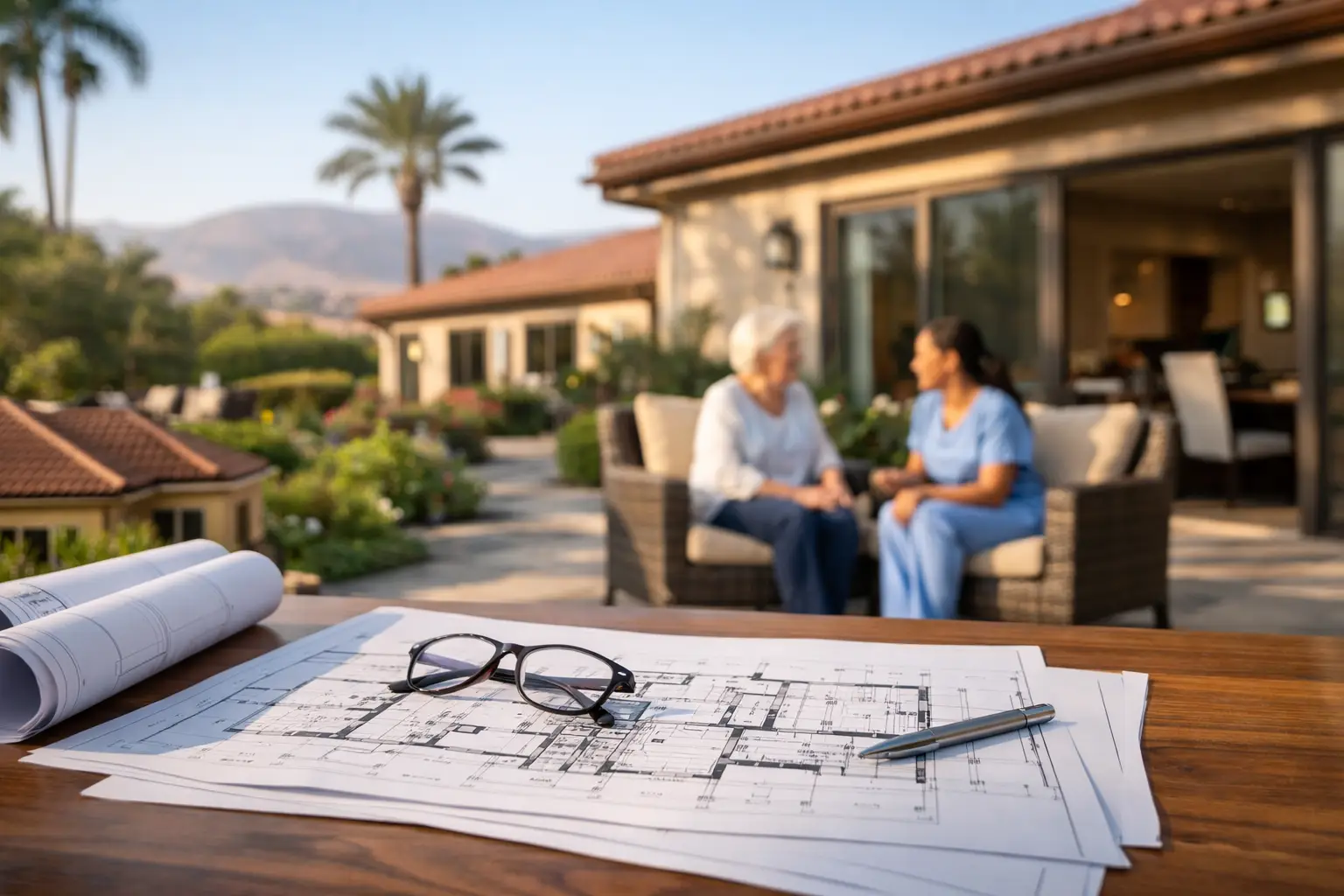
If you are turning a house into a care home, the plans matter far more than most owners expect. California residential care facility plans are not just standard residential drawings with a new label. They need to show a property that can satisfy building requirements, life-safety expectations, and local review standards before you sink time and money into construction.
That is where many projects get slowed down. A property owner may have the right location and a solid business model, but the approval path gets complicated once the city, county, or state reviewers start looking at use, occupancy, accessibility, exiting, and site constraints. The earlier those issues are addressed in the planning stage, the smoother the project usually moves.
What California residential care facility plans need to accomplish
A good plan set does two jobs at the same time. First, it has to translate your vision into clear construction documents. Second, it has to answer the questions that plan reviewers are going to ask before they ask them.
For a residential care facility, that often means showing much more than room sizes and wall locations. Reviewers may want to understand bedroom counts, bathroom access, exit pathways, smoke and carbon monoxide alarm placement, door and corridor widths, accessibility features where required, and whether the existing structure can support the intended use. Depending on the project, site details, parking, fire department access, and exterior modifications may also matter.
This is why a simple remodel mindset can create problems. A house may look usable for care purposes, but approval depends on what the jurisdiction requires on paper and what the existing building can realistically support.
Why these projects are rarely one-size-fits-all
Not every care facility conversion follows the same rules. The exact requirements can shift based on the number of residents, ambulatory or non-ambulatory use, whether bedridden occupants are involved, the age of the structure, and the standards enforced by the local jurisdiction. That is the part many first-time owners do not see coming.
Two homes with similar square footage can have very different approval paths. One may move forward with modest upgrades. Another may trigger larger changes because of exiting limitations, bathroom clearances, fire separation issues, or site restrictions. The difference is often found in the details, not the marketing description of the property.
That is why experienced planning support matters early. It is cheaper to identify likely red flags before drawings are finalized than to revise plans repeatedly after comments come back.
The biggest issues that affect California residential care facility plans
The first issue is use classification and code interpretation. Even when a facility operates in a house, it does not always get reviewed like a typical single-family residence. Occupancy classification, licensing conditions, and local enforcement practices can influence the plan review process. If that is misunderstood from the start, the drawings can head in the wrong direction.
The second issue is exiting and life safety. Review agencies look closely at how residents will move through the home and out of it during an emergency. This includes door swing conditions, travel paths, bedroom arrangements, common area access, and whether the layout makes sense for the intended residents.
The third issue is accessibility. Not every project has the same accessibility scope, but many care-related projects need careful review of entries, bathrooms, circulation space, and fixture clearances. Owners sometimes assume they can handle these items later in construction. In practice, accessibility problems are much easier to fix on paper than after framing, plumbing, or finish work begins.
The fourth issue is the existing building itself. Older homes may have nonconforming features, low-performing layouts, or undocumented changes from prior remodels. If the property has unpermitted work, outdated construction, or structural limitations, those conditions can affect the permit path and the final scope.
A practical approach to the planning process
The best approach starts with evaluating the property before committing too heavily to a final design direction. That means looking at the existing layout, the intended resident type, likely code triggers, and the local jurisdiction’s expectations. At this stage, honesty matters. Some properties are a strong fit for conversion. Others will require enough correction work that the project becomes less practical.
Once the project direction is confirmed, the drawings need to be built around approval, not just around use. That includes accurate existing conditions, proposed floor plans, elevations if exterior changes are involved, and the supporting details needed for permit review. Clear documents reduce confusion for both the builder and the reviewer.
After submittal, the next real test is plan check. This is where many projects lose momentum. Comments can come back from building, planning, fire, or public works depending on the site and scope. Fast, organized responses make a major difference. When corrections are handled by someone who understands both construction and permit expectations, the process usually becomes less frustrating.
How to avoid common approval delays
A lot of delays come from preventable mistakes. One is assuming state-level rules are the whole story. In reality, local jurisdictions often have additional requirements or interpretation standards that shape the permit process. Another is submitting incomplete or overly generic drawings that leave too much unanswered.
There is also the issue of timing. Owners sometimes wait until late in the process to confirm utility changes, fire access concerns, or site constraints. If those issues affect the design, the plans may need substantial revision. That is why front-end coordination pays off.
Contractors see this problem all the time. A project seems ready to move, then stalls because a reviewer identifies layout, code, or documentation issues that should have been addressed weeks earlier. Permit-ready planning is not about making plans look polished. It is about making them review-ready.
Working with a drafting and permit partner
For residential care projects, the value of a planning partner is not just drafting. It is having someone who can look at the property, understand the likely approval path, and prepare documents that align with how jurisdictions actually review projects.
That matters for homeowners entering an unfamiliar process, and it matters just as much for contractors who need reliable drawings and responsive plan-check support. A good partner helps reduce guesswork, catches issues before submittal, and stays involved when corrections come back.
JDFales Plans & Permits approaches these projects with that practical mindset. The goal is not to overcomplicate the process. It is to create clear plans, anticipate review issues, and help clients move from concept to approval with fewer surprises.
What owners and builders should settle early
Before the plans are fully developed, it helps to get clear on a few points. The intended resident count, the level of care, whether residents are ambulatory, what exterior changes are expected, and whether the existing home has known issues can all affect the permit strategy.
This is also the stage to ask hard questions about budget and timeline. Some upgrades are manageable and worth doing. Others may change the economics of the project. It depends on the property, the jurisdiction, and how much work is needed to bring the building into alignment with the proposed use.
That does not mean the project is risky by default. It means successful projects are usually the ones that start with realistic planning instead of assumptions.
California residential care facility plans should reduce uncertainty
When plans are done right, they do more than satisfy a permit requirement. They give owners and builders a clearer path forward. You can price the job more accurately, respond to reviewer comments faster, and move into construction with better control over scope.
That is especially important for care facility projects, where delays can affect financing, operations, licensing timelines, and occupancy goals. Every round of avoidable corrections costs time. In some cases, it also leads to redesign work that could have been prevented.
The right planning process will not remove every challenge. Some properties are complex, and some jurisdictions are stricter than others. But clear, permit-focused documents put you in a much stronger position than trying to sort out code and layout issues after submittal.
If you are considering a care facility conversion, start by treating the plans as a core part of the project strategy, not a formality. When the drawings reflect the real approval path, the next steps become much easier to manage.