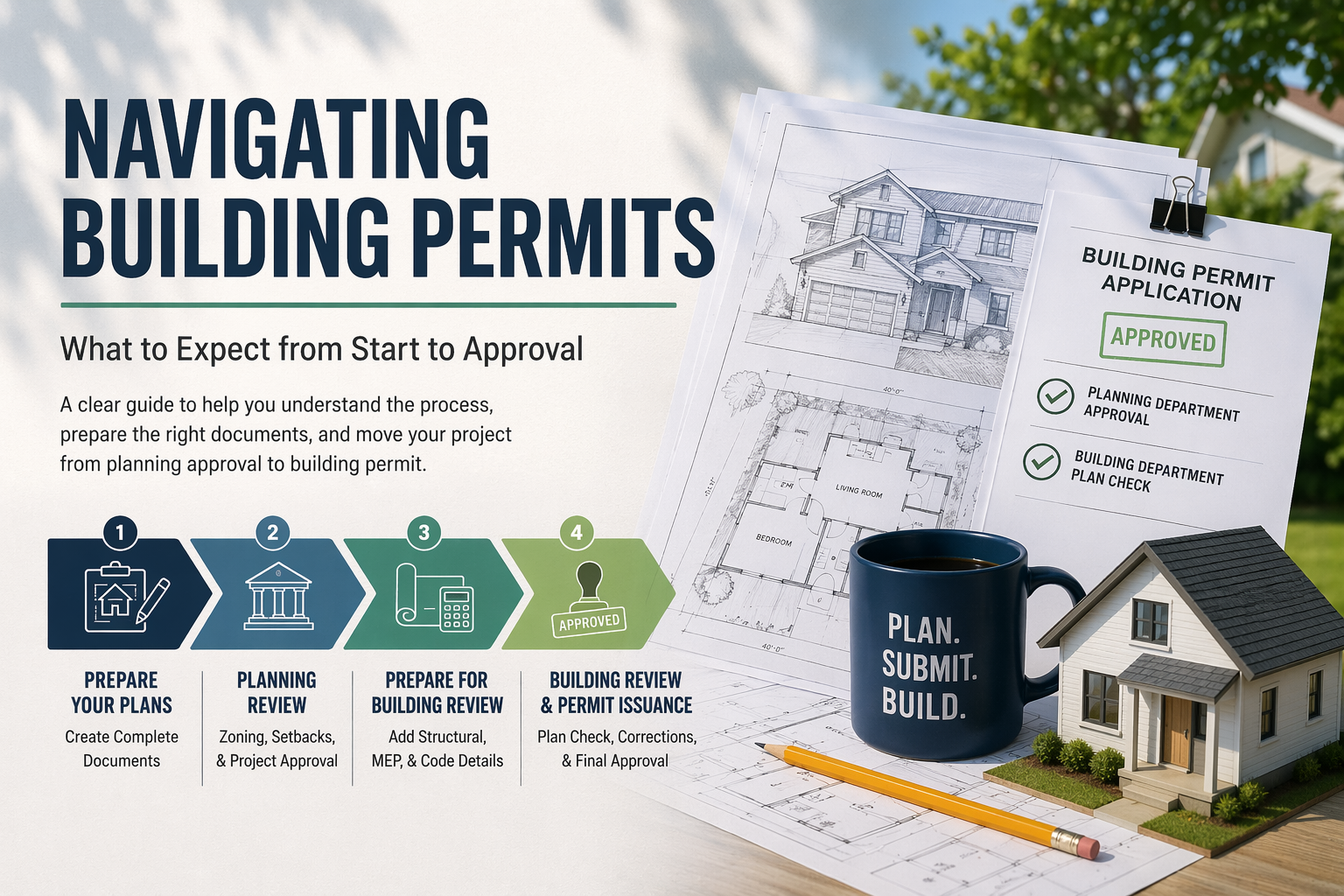
Navigating Building Permits in California
What to Expect from Start to Approval
If you have never gone through the building permit process before, it can feel confusing and slow. Many homeowners assume you submit plans once and get approved. In reality, it is a multi-step process involving different departments, multiple reviews, and several rounds of corrections.
This guide walks you through the process so you know what to expect before you begin.
Step 1: Defining Your Project Scope
Every permit starts with a clear scope of work.
Ask yourself:
- What exactly am I building or changing?
- How large is the project?
- Will it affect structure, utilities, or property lines?
Common projects include:
- Additions
- ADUs
- Garage conversions
- Interior remodels
- Exterior changes
The clearer your scope, the smoother the process will go.
Step 2: Preparing Your Plans
Before anything gets submitted, you need a complete set of construction drawings.
Most residential plan sets include:
- Site plan
- Floor plans
- Elevations
- Roof plan
- Sections and details
- Code notes
Depending on your project, you may also need:
- Structural engineering
- Title 24 energy reports
- Soils or geotechnical reports
- Survey or topographic map
This is where many projects slow down. Incomplete or unclear plans will lead to delays later.
Step 3: Planning Department Review
Once your plans are ready, they are first submitted to the Planning Department.
Planning focuses on how your project fits within zoning rules, not how it is built.
They review things like:
- Setbacks from property lines
- Building height
- Lot coverage
- Parking requirements
- Neighborhood compatibility
What to Expect
- Initial review can take a few weeks
- You will likely receive correction comments
- Revisions are normal and expected
Most projects go through at least one or two rounds of corrections before approval.
Key Insight
Planning approval does not mean you can build. It only means your project is allowed under zoning rules.
Step 4: Preparing for Building Department Submittal
After planning approval, your plans must be refined for construction.
This usually includes:
- Structural calculations and details
- Energy compliance documentation
- Electrical, plumbing, and mechanical information
- Additional code-specific notes
At this stage, the plans must be technically complete and “permit-ready.”
Step 5: Building Department Review
Now your project moves to the Building Department.
This review focuses on how the project is built, not where it is located.
Reviewers typically include:
- Structural
- Electrical
- Mechanical
- Plumbing
- Fire (in some jurisdictions)
What to Expect
- Another round of plan check comments
- Requests for clarification or additional details
- Coordination between consultants
Just like planning, revisions are part of the process.
Step 6: Corrections and Resubmittals
Almost every project requires corrections.
This phase includes:
- Reviewing plan check comments carefully
- Updating drawings and documents
- Resubmitting for review
The speed of this step depends heavily on how clearly the corrections are addressed.
Step 7: Permit Approval and Issuance
Once all departments approve your plans:
- Final fees are paid
- The permit is issued
- Construction can begin
At this point, your plans become the official documents used for inspections.
Common Mistakes to Avoid
- Submitting incomplete plans
- Underestimating the time required
- Ignoring zoning constraints early
- Failing to coordinate consultants
- Expecting first-round approval
Why the Process Feels Complicated
The permit process involves multiple layers because each department is responsible for a different part of your project:
- Planning protects the neighborhood and zoning rules
- Building ensures safety and code compliance
- Consultants provide specialized technical design
Each step builds on the one before it.
Final Thoughts
The building permit process is not a one-step approval. It is a structured path with checks and balances designed to protect both you and your property.
If you understand the sequence ahead of time, you can avoid delays and move through the process more efficiently.
At JDFales Plans & Permits, we help homeowners and property owners navigate this entire process from initial design through permit approval. If you are planning a project and want a smoother path to approval, visit JDFalesPlans.com to get started.