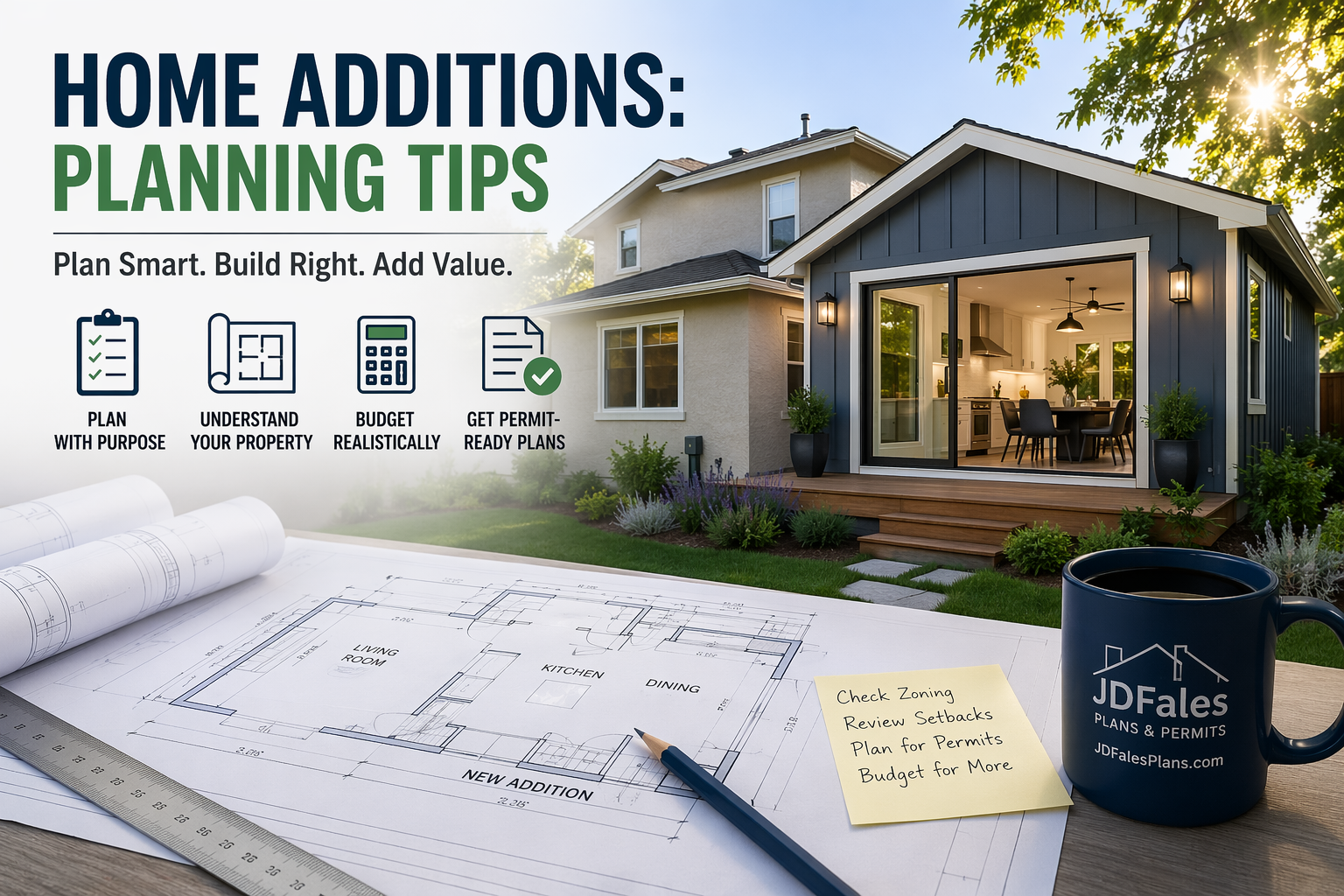
Home Additions: Planning Tips
How to Expand Your Home the Right Way in California
If you’re running out of space but love your home, a home addition can be one of the smartest investments you can make. Whether you’re adding a bedroom, expanding your kitchen, or building a second story, the key to success is proper planning from the start.
At JDFales Plans & Permits, we help homeowners turn ideas into permit-ready construction plans. Here’s what you need to know before starting your home addition.
1. Start with a Clear Goal
Before you draw anything, define why you want the addition.
Are you:
- Adding space for a growing family?
- Increasing resale value?
- Creating a rental unit or guest suite?
- Improving functionality (larger kitchen, open layout)?
Your goal drives everything. Size, layout, budget, and even permitting strategy.
2. Understand Your Property Constraints
Not every property can support every type of addition.
Key limitations include:
- Zoning regulations
- Setback requirements
- Lot coverage limits
- Height restrictions
- Easements and utility clearances
In California, these rules vary by city and county. A professional review early on can save you weeks of redesign and frustration.
3. Choose the Right Type of Addition
Different additions come with different costs and complexities:
Common Types of Home Additions
- Room Addition – New bedroom, office, or living space
- Kitchen Expansion – Improves flow and increases value
- Second Story Addition – Maximizes space without expanding footprint
- Garage Conversion – Cost-effective way to add livable space
- Bump-Out Addition – Small expansion with big impact
Each option affects structure, foundation, and permitting differently.
4. Budget for More Than Construction
One of the biggest mistakes homeowners make is underestimating total costs.
Plan for:
- Design and drafting
- Structural engineering
- Energy compliance (Title 24)
- Permit fees
- School fees (in some jurisdictions)
- Construction costs
- Unexpected conditions
A realistic budget upfront prevents costly surprises later.
5. Get Permit-Ready Plans Early
This is where most projects either succeed or stall.
Cities don’t approve ideas. They approve complete, code-compliant construction plans.
A proper plan set typically includes:
- Site plan
- Floor plans
- Elevations
- Roof plan
- Sections and details
- Structural coordination
- Energy reports
At JDFales Plans & Permits, we specialize in creating permit-ready plans that move efficiently through city review.
6. Expect Multiple Plan Check Rounds
Even well-prepared plans often go through:
- Initial review
- Corrections
- Resubmittal
- Final approval
This is normal.
The goal is not to avoid corrections entirely. The goal is to minimize delays with a clean, coordinated submittal.
7. Coordinate Consultants Early
Most additions require additional professionals, such as:
- Structural engineers
- Energy consultants (Title 24)
- Surveyors or civil engineers (depending on site conditions)
Bringing them in at the right time keeps your project moving.
8. Think About Construction Logistics
Design is only part of the equation.
Consider:
- How the addition ties into the existing structure
- Temporary disruptions during construction
- Access for contractors
- Material staging
- Living in the home during construction
Good planning reduces stress during the build phase.
9. Design for Long-Term Value
A well-designed addition should feel like it was always part of the home.
Focus on:
- Matching rooflines and materials
- Natural light and flow
- Functional layouts
- Future flexibility
This is where professional design makes a major difference.
10. Work with a Permit Specialist
Navigating California’s permitting process can be complex.
Working with a professional who understands:
- Local planning departments
- Building codes
- Submittal requirements
- Review strategies
…can save you months of delays.
Why Homeowners Choose JDFales Plans & Permits
At JDFalesPlans.com, we simplify the entire process:
- As-built measurements
- Custom design and drafting
- Permit-ready construction plans
- Coordination with consultants
- Permit submittal support
We don’t just draw plans. We help you get approved and move forward with confidence.
Ready to Start Your Home Addition?
If you’re thinking about expanding your home, start with a solid plan.
Visit JDFalesPlans.com to learn more or schedule a consultation.