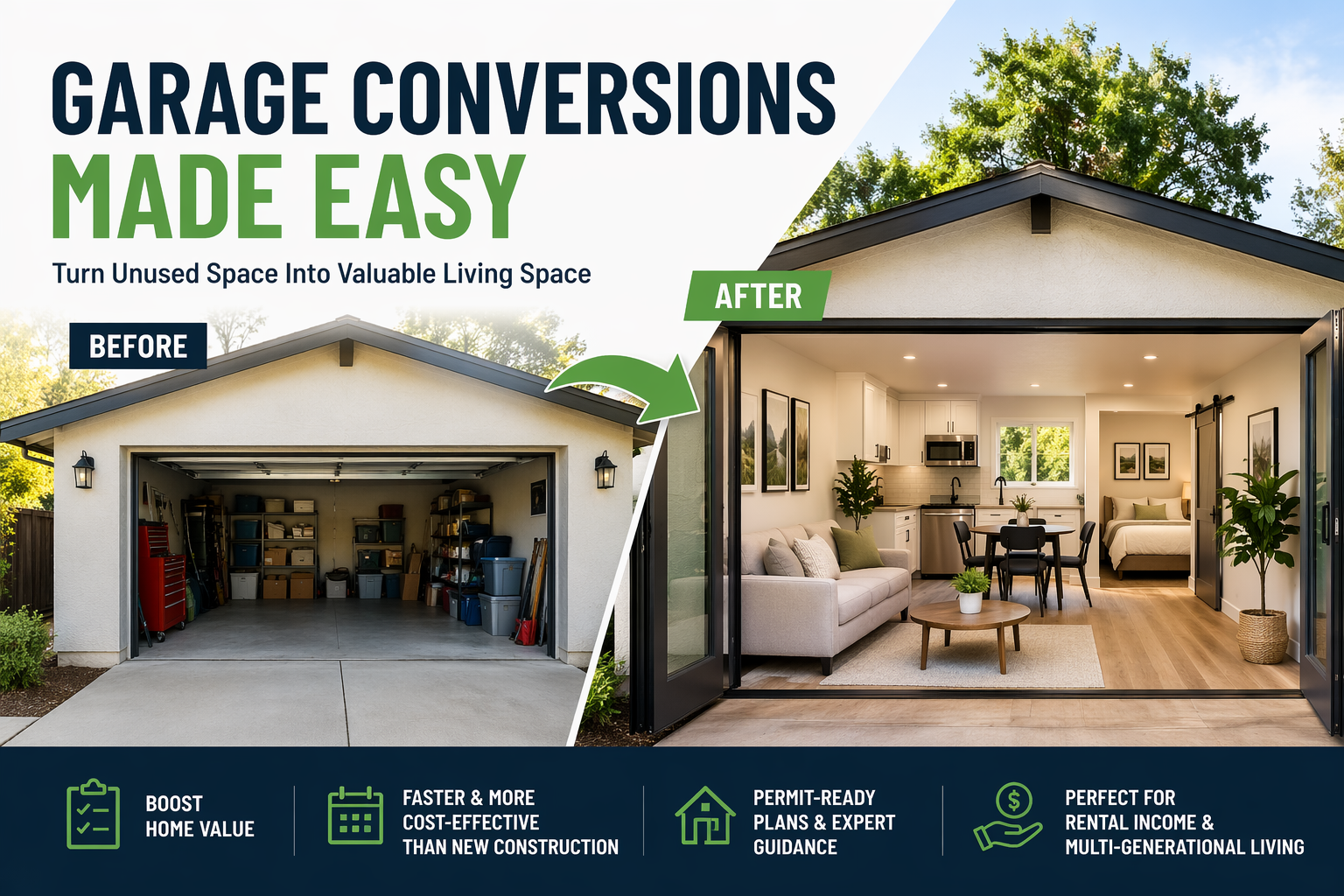
Converting a Garage to an ADU
A Homeowner’s Guide to Turning Unused Space into Valuable Living Area
If you have a garage that’s collecting clutter instead of adding value, you’re sitting on one of the easiest and most cost-effective opportunities to expand your home.
Garage conversions are one of the fastest ways to create livable square footage without building an entirely new structure. In California, they are especially attractive because they can often be converted into an Accessory Dwelling Unit (ADU) or flexible living space with fewer zoning hurdles than a full addition.
At JDFales Plans & Permits, we help homeowners turn underutilized garages into fully permitted, functional living spaces every day.
This guide breaks the process down so you know exactly what to expect.
Why Garage Conversions Are So Popular
Garage conversions check all the right boxes for homeowners right now:
- Lower cost than new construction
- Faster permitting timelines (in many jurisdictions)
- No need to expand your home’s footprint
- Ideal for rental income or multi-generational living
- Strong return on investment in California markets
If you’re looking for a smart way to invest in your property, this is one of the most practical options available.
What Can You Turn a Garage Into?
A garage conversion is flexible. You are not locked into one outcome.
Common options include:
- ADU (Accessory Dwelling Unit)
- Home office or studio
- Guest suite
- Rental unit for passive income
- In-law quarters
- Gym or creative workspace
The right choice depends on your goals, your lot, and your local zoning rules.
Step-by-Step: How a Garage Conversion Works
1. Feasibility Check
Before anything is drawn, you need to confirm what’s allowed on your property.
This includes:
- Zoning and ADU eligibility
- Setbacks and lot coverage
- Parking requirements (often waived for ADUs)
- Utility access and capacity
This step prevents costly redesigns later.
2. As-Built Plans
Next, the existing garage is documented.
This includes:
- Dimensions
- Structural layout
- Roof configuration
- Existing utilities
These plans become the foundation for your design.
3. Design & Layout
This is where your vision takes shape.
Key decisions include:
- Layout and room function
- Kitchen and bathroom placement
- Natural light and windows
- Ceiling height and insulation strategy
A well-designed conversion feels like it was always part of the home.
4. Construction Plans & Engineering
Once the design is finalized, a full permit-ready plan set is created.
This typically includes:
- Architectural drawings
- Structural engineering (if required)
- Title 24 energy compliance
- Site plan and code notes
This is the exact package your city will review.
5. Permit Submission & Plan Review
Your plans are submitted to the city for approval.
Expect:
- Plan review comments
- Possible revisions
- Coordination between planning and building departments
This is where experience matters. Knowing how to respond quickly can save weeks.
6. Permit Approval & Construction
Once approved, you receive your building permit and can begin construction.
Typical upgrades during a garage conversion include:
- Slab insulation or raised flooring
- New framing and drywall
- Electrical and plumbing upgrades
- HVAC installation
- Exterior upgrades to match the home
Key Challenges (and How to Avoid Them)
Garage conversions are straightforward, but there are a few common pitfalls:
1. Ceiling Height Issues
Many garages were not built with living space in mind. Solutions may include reframing or creative design.
2. Slab and Moisture Concerns
Garage slabs are often lower than the house. Proper insulation and moisture control are critical.
3. Structural Modifications
Garage door openings usually need to be framed in and properly supported.
4. Permit Mistakes
Incomplete or poorly coordinated plans can delay approval.
This is where working with an experienced permit professional makes a major difference.
How Much Does a Garage Conversion Cost?
Costs vary based on scope, but typical ranges in California are:
- Basic conversion: $60,000 – $100,000
- Full ADU conversion: $100,000 – $180,000+
Factors that affect cost:
- Plumbing and sewer connection
- Electrical upgrades
- Structural work
- Finish quality
Even at higher price points, conversions are often far more affordable than new construction.
Why Work with JDFales Plans & Permits
A garage conversion is only “easy” when it’s done right from the start.
At JDFales Plans & Permits, we:
- Design permit-ready plans tailored to your property
- Coordinate with structural and energy consultants
- Handle plan submittals and city communication
- Help you avoid delays and costly mistakes
We simplify the entire process so you can focus on the end result.
Ready to Convert Your Garage?
If you’re thinking about converting your garage, the best first step is understanding what your property can support.
Visit JDFalesPlans.com to get started or request a consultation.
Turn your unused space into something valuable.