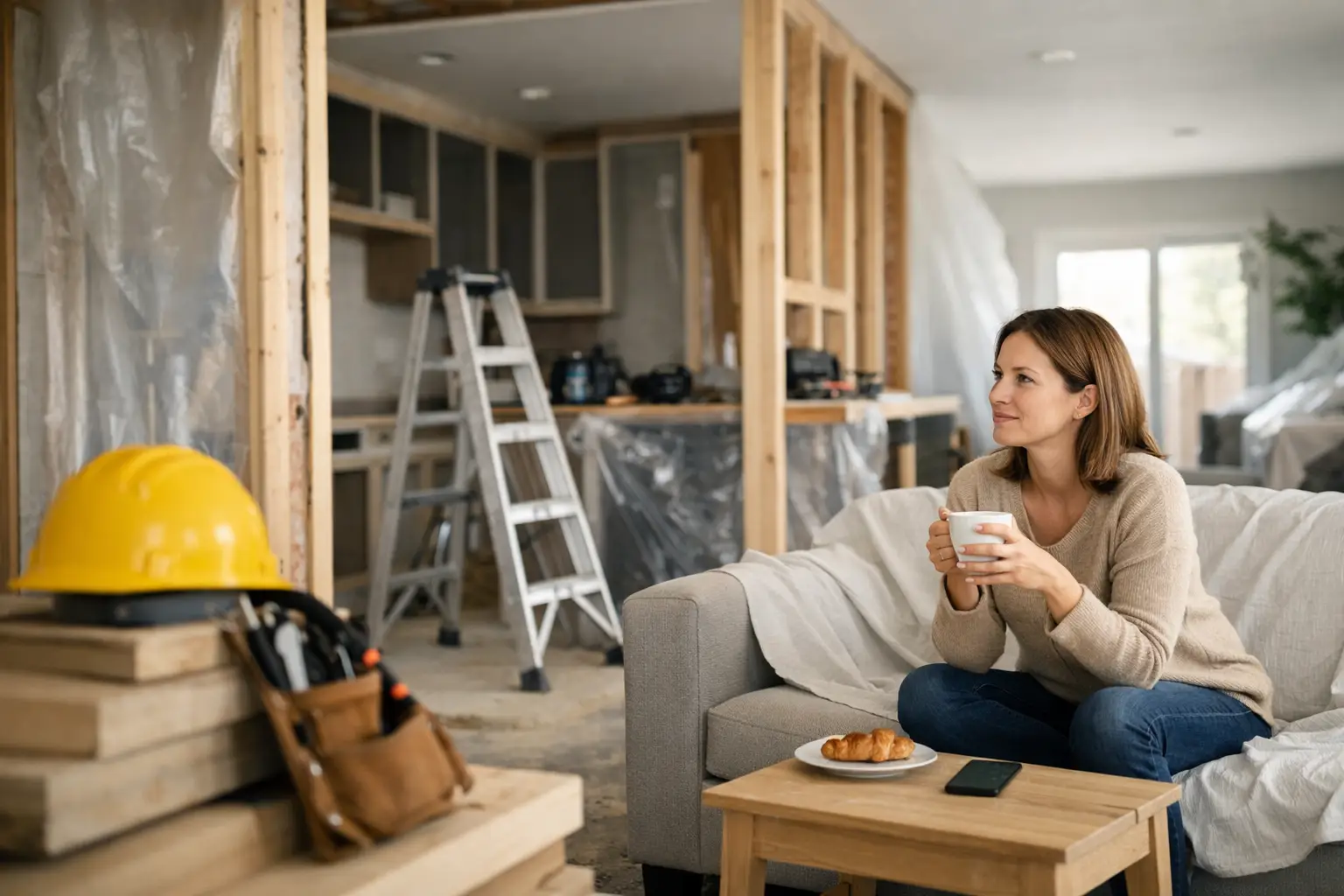
The question usually comes up right after the budget conversation. A homeowner is ready to move forward, the plans are taking shape, and then reality hits – can I live in my house during a major remodel?
The honest answer is yes, sometimes. But whether you should stay is a different question. The right decision depends on which parts of the home are under construction, how long key systems will be offline, what your local building department requires, and how much disruption your household can realistically handle.
For some remodels, staying put is inconvenient but manageable. For others, it creates safety issues, delays the work, and adds stress that could have been avoided with better planning up front.
Can I live in my house during a major remodel? Start with scope
The biggest factor is scope. A remodel that affects one contained area of the home is very different from a whole-house renovation, major addition, or structural rework. If the project leaves you with a functioning kitchen, at least one usable bathroom, reliable power, and safe access in and out of the home, living there may be possible.
Once those basics start disappearing, the answer changes fast. If your kitchen is demolished for weeks, your only bathroom is out of service, or electrical and plumbing shutoffs are frequent, daily life becomes difficult. If walls are opened throughout the house, dust control gets harder, noise becomes constant, and the home can stop feeling livable even if technically you can still sleep there.
Structural work is another line in the sand. When a project involves framing changes, foundation work, major reconfiguration, or large-scale system upgrades, the house often becomes an active construction zone instead of a residence. At that point, staying may save money on temporary housing but cost you time, comfort, and peace of mind.
When staying in the home can work
Homeowners can sometimes remain in place during phased remodels. This works best when the contractor can isolate the work area and keep the rest of the house functional. A rear addition, a garage conversion that does not disrupt the main living area, or a remodel done in clearly separated stages may allow you to stay.
It also helps if your household is flexible. A couple who works outside the home all day and can tolerate some inconvenience may manage fine. A family with young children, pets, remote work demands, or medical needs may have a much lower threshold for disruption.
The schedule matters too. A well-planned project with permit-ready drawings, realistic sequencing, and fewer field surprises is easier to live through than a project that starts before details are resolved. One of the most common reasons remodels become miserable is that the preconstruction planning was too loose, so decisions get pushed into the middle of demolition and the job stretches longer than expected.
When moving out is the better call
If the remodel removes essential services for more than a day or two, moving out is usually the better decision. No kitchen for six weeks is one thing. No bathroom, intermittent power, exposed wiring, open framing, and crews moving through the house every day is another.
Health and safety should drive the decision, not just convenience. Construction dust travels farther than most homeowners expect. Demo debris, tools, cords, unsecured openings, and temporary barriers create real hazards. If anyone in the household has asthma, mobility limitations, or sensitivity to noise and dust, temporary relocation may be the safer option.
There is also a productivity issue. Contractors generally work faster when they do not have to protect occupied living areas every hour of the day, coordinate around nap schedules, or reopen pathways at the end of each shift. A vacant house can be more efficient to remodel, which may reduce labor time and shorten the overall timeline.
Utilities and access are the real test
If you are deciding whether you can stay, focus less on optimism and more on practical systems. Ask whether the home will have dependable water, sewer, power, heating or cooling when needed, and safe entrances and exits throughout the project.
Bathroom access is often the deal-breaker. If your only full bathroom is under remodel, you need a serious backup plan, not a vague idea that the contractor will work around it. The same goes for kitchen use. A microwave in the garage and a mini fridge can get you through a short stretch, but it is not a real substitute for a functioning food prep area over a long project.
Access is especially important when permits are involved. Inspections, temporary shutoffs, and code-required corrections can affect when parts of the home can be used again. A project may look straightforward on paper, but once walls are opened, existing conditions sometimes reveal code or construction issues that must be addressed before work can continue.
Permits, inspections, and why planning matters
This is where many homeowners underestimate the process. Whether you can live in your house during a major remodel is not just a construction question. It is also a planning and permitting question.
If your project requires permits, the approved scope, inspection sequence, and code requirements can all influence occupancy during construction. For example, major electrical upgrades, plumbing changes, structural modifications, or fire-life-safety requirements may temporarily affect what portions of the house can be used. In California jurisdictions, local enforcement can vary in how specific they are about temporary conditions, but the broader point stays the same – approved plans and a clean permit path reduce surprises.
When plans are incomplete or not coordinated well, problems tend to show up in the field. That is when a project slows down, trades step on each other, and homeowners end up living in a half-demolished space longer than expected. Good preconstruction documents do more than help get a permit. They help everyone understand what is being built, in what order, and with what impact on the occupied parts of the home.
Questions to ask before you decide to stay
Before you commit to living through the remodel, ask your team specific questions. Which rooms will be unusable, and for how long? Will water or power be shut off, and on what schedule? Will there be dust barriers and protected walkways? Is there a phase plan that keeps one bathroom operational? Are there any points in the job when the home will not be safe or practical to occupy?
You should also ask how the timeline changes if the house is occupied. Some contractors will tell you directly that an occupied remodel takes longer. That does not mean they cannot do it well. It means you should understand the trade-off before work begins.
For homeowners acting as owner-builders, this matters even more. If you are coordinating trades yourself, occupancy can add another layer of complexity. You are not just managing materials and inspections. You are also managing your household inside an active jobsite.
The hidden costs of staying
Many people choose to remain in the home to save on rent or hotel costs, which is understandable. But staying has costs too, even if they do not show up as a line item.
Meals become more expensive when the kitchen is offline. Laundry may become difficult. Sleep quality drops when demolition starts early. Remote work can become frustrating or impossible. Kids and pets need containment plans. Cleaning takes more effort, and some belongings may need to be packed and moved multiple times.
Then there is the emotional wear. A major remodel is disruptive even when it is well run. If your house is your workplace, your family space, and your construction site all at once, the strain adds up quickly. Sometimes temporary housing is not an extra expense so much as a way to protect the schedule and your sanity.
A realistic way to make the call
If the project is limited, phased, and leaves core services intact, living at home may be reasonable. If the remodel affects kitchens, bathrooms, structural systems, or most of the house at once, moving out is often the smarter path.
The best decision comes from clear plans, an honest construction schedule, and a direct conversation about safety and livability, not wishful thinking. This is one reason early planning matters so much. When the scope is documented properly and permit requirements are understood before construction starts, you can make a housing decision based on facts instead of guesswork.
If you are in the early stages of a remodel, it helps to treat temporary living arrangements as part of project planning, not as a last-minute reaction. That mindset usually leads to fewer delays, fewer change-of-plan headaches, and a smoother build from start to finish.
A major remodel should improve how your home works for you. If moving out for a short time gives the project room to move faster, safer, and with fewer surprises, that choice can be just as practical as any construction decision you make.