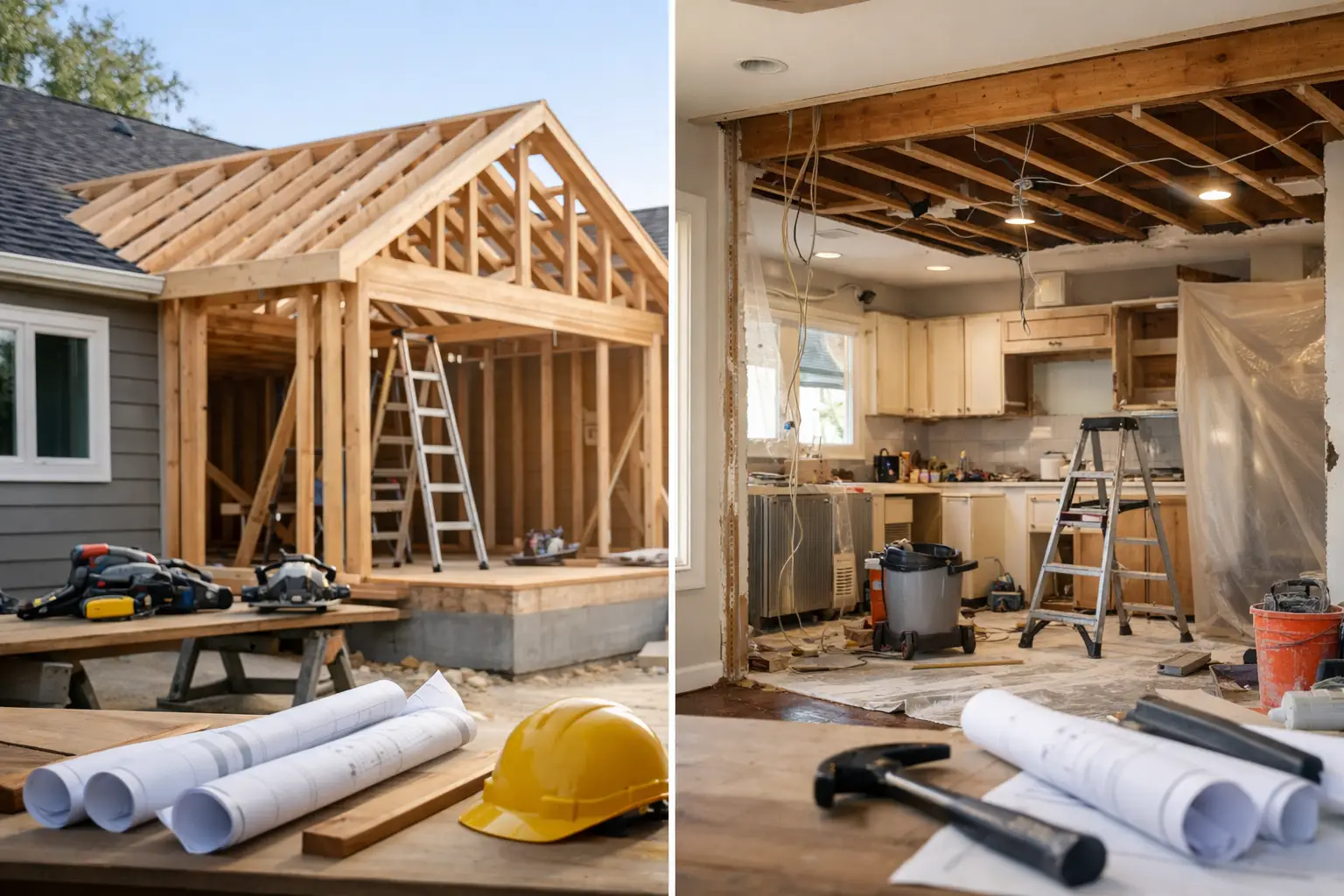
A lot of permit problems start with one wrong assumption: if the outside of the house is not changing much, the project must be a simple remodel. In reality, addition permits vs remodel permits is one of the most common points of confusion for homeowners and contractors, and that confusion can cost time, redesign fees, and plan-check delays.
The difference matters because cities and counties do not review all residential work the same way. A kitchen reconfiguration inside the existing footprint is not evaluated like a new bedroom addition. Even when both projects improve the same home, the scope, code triggers, drawings, and review comments can be very different.
What is the difference between addition permits vs remodel permits?
At the simplest level, a remodel permit applies to work within an existing structure, while an addition permit applies when you are increasing the building area or enclosed livable space. That sounds straightforward, but real projects often blur the line.
A remodel usually involves altering existing rooms, walls, systems, or layouts without expanding the home’s footprint. This can include moving nonstructural walls, reworking structural framing, updating kitchens or bathrooms, changing window or door sizes, or modifying plumbing and electrical systems. Depending on the scope, the city may still require structural calculations, energy documents, and detailed code review.
An addition, by contrast, creates new conditioned space or extends the structure outward. A new bedroom, family room expansion, second-story addition, or enclosed sunroom typically falls into this category. Once you add square footage, the jurisdiction often looks more closely at setbacks, lot coverage, height limits, foundation design, energy compliance, and how the new area ties into the existing house.
The gray area shows up when a project includes both. If you are removing walls, relocating a kitchen, and adding 250 square feet at the rear of the home, it is not just a remodel anymore. It becomes an addition project with remodel components, and the permit path usually follows the more demanding review.
Why addition permits usually face more review
Most remodels are reviewed for life safety, structural adequacy, and code compliance within the existing building envelope. Additions do all of that, but they also trigger site-related questions. The city may want confirmation that the new work complies with zoning requirements, fire separation distances, lot constraints, drainage considerations, and neighborhood development standards.
In California, that can mean a project runs through both building and planning review, not just one desk. A homeowner may think, “We are only adding a small room,” but the jurisdiction may still require review of setbacks, floor area ratio, easements, and energy performance. If the property has prior unpermitted work or nonconforming conditions, the review can get more complicated quickly.
That does not mean every addition is difficult. It means additions tend to carry more variables, and those variables need to be resolved in the plans before submittal rather than argued through corrections later.
When a remodel permit is not as simple as it sounds
Some remodels are light-touch projects. Others trigger major review because they affect structure, egress, or core building systems. If you are removing load-bearing walls, converting a garage, changing sleeping room layouts, or relocating bathrooms and kitchens, the city may require much more than a basic over-the-counter review.
For example, a remodel that changes window sizes in bedrooms can trigger egress review. Reframing ceilings or opening up a floor plan can trigger structural review. Updating large portions of the home may also trigger energy documentation or smoke and carbon monoxide detector upgrades. If the house is older, the permitting authority may want existing conditions documented more clearly than the owner expected.
This is why calling something a remodel does not automatically make it quick. The scope of work matters more than the label.
Typical plan requirements for each permit type
For a remodel permit, the city usually expects a clear scope of work, existing and proposed floor plans, structural information where applicable, and supporting documents for electrical, plumbing, mechanical, and energy compliance if those systems are affected. The more the remodel changes the layout or structure, the more detailed the plans need to be.
For an addition permit, those same items are typically required, but the drawing set often expands to include a site plan, setbacks, elevations, foundation details, roof framing, sections, and a stronger code analysis of the new space. Because the addition changes the building envelope, the plans need to show how the new construction connects to the existing home and meets current requirements.
This is one reason permit-ready drafting matters. Incomplete or vague plans often create preventable corrections, especially when the jurisdiction cannot tell whether the project is a remodel, an addition, or both.
Cost and timeline differences
Homeowners often ask whether addition permits cost more than remodel permits. Usually, yes. Permit fees are commonly tied to project valuation, square footage, review discipline, and the number of inspections required. Additions tend to involve more of each.
Timelines also tend to run longer for additions, though local backlog and submittal quality matter just as much as project type. A well-prepared addition can move faster than a poorly documented remodel. On the other hand, even a modest addition may slow down if it runs into zoning questions, site limitations, or plan-check corrections.
For contractors, this is where realistic scheduling matters. Promising a start date before permit comments are resolved can put pressure on everyone involved. A better approach is to match expectations to the actual review path from the beginning.
Common mistakes that cause permit delays
One of the biggest mistakes is describing an addition as a remodel to make the project sound simpler. That usually backfires. If the plans show new square footage, expanded walls, or a changed roofline, the jurisdiction will treat it as an addition regardless of how the application is worded.
Another common issue is failing to document existing conditions. For remodels especially, reviewers need to understand what is there now and what is changing. Missing dimensions, incomplete framing notes, and unclear scope language can all trigger corrections.
A third problem is assuming all cities review the same way. They do not. One jurisdiction may accept a certain level of detail for a bathroom remodel, while another may ask for a fuller set. In the Sacramento region and throughout California, local interpretation can have a real effect on turnaround time and resubmittal requirements.
How to tell which permit your project needs
Start with one question: are you expanding the home’s footprint or enclosed floor area? If yes, you are likely in addition territory. If no, the project may be a remodel, but you still need to look at structural work, occupancy-related changes, and system upgrades.
The next question is whether the work changes how the home functions. Creating a new bedroom, converting a garage, reworking major structural elements, or relocating plumbing fixtures can all push a project into a more detailed permit review, even if the square footage stays the same.
This is where early planning saves money. A quick permit strategy review can identify whether the project needs a simple remodel submittal, a full addition package, or a combined set that addresses both. That helps avoid redesign after comments come back.
Why the right classification matters from day one
Permit approval is not just about getting a stamp. It affects budgeting, scheduling, construction sequencing, and how much confidence you have that the project can move forward without surprises. Misclassify the job early, and the plans, consultant scope, and submittal path may all be off.
For homeowners, that often shows up as frustration and delay. For contractors, it can mean idle labor, pushed schedules, and extra coordination. The better path is to define the scope accurately from the start and prepare plans that match what the jurisdiction will actually review.
At JDFales Plans & Permits, that is where experienced drafting and permit guidance make a difference. When the plans clearly communicate whether the project is a remodel, an addition, or a combination of both, plan review tends to move with fewer surprises and fewer rounds of corrections.
If you are not sure where your project falls, that uncertainty is worth addressing before submittal, not after the first correction letter. A little clarity up front can save weeks later.