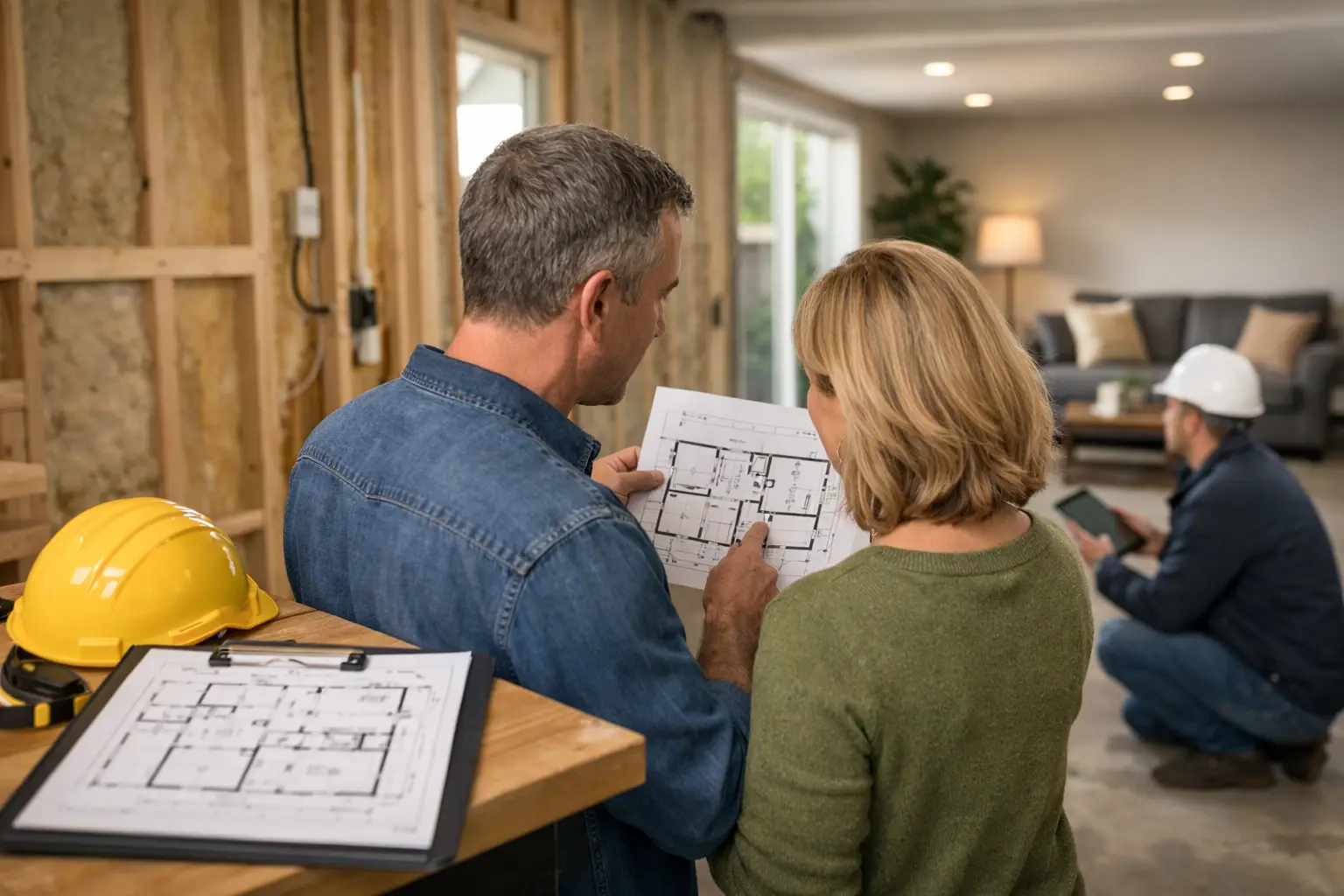
The surprise with most garage conversions is not the framing, drywall, or finishes. It is the moment a homeowner learns that converting a garage into legal living space means meeting the code for a habitable room, not just remodeling an existing shell. A good garage conversion code guide helps you spot that difference early, before drawings are submitted and plan check turns into a long list of corrections.
Garage conversions look simple from the outside because the structure is already there. In practice, they often trigger a full review of ceiling height, foundation conditions, energy compliance, emergency egress, insulation, ventilation, electrical load, and whether the property can still satisfy local zoning and parking rules. That does not mean the project is unrealistic. It means the fastest approvals usually come from understanding the code path before anyone starts building.
What a garage conversion code guide should cover first
The first question is not, “Can I build walls and add a bathroom?” It is, “Will my city or county allow this space to become habitable area on this property?” That is a zoning and use question before it is a construction question.
Some garage conversions are processed as part of an ADU, some are treated as an addition or alteration to the main home, and some are limited by parking replacement rules or lot-specific conditions. In California, local ordinances can change the path significantly, especially when the project involves a detached garage, a junior ADU, or a full ADU conversion. The same physical space can have different submittal requirements depending on how the final use is classified.
Once use and zoning are clear, the building code side becomes more predictable. At that point, the plans need to show that the converted space will perform like legal living area, not leftover accessory space.
The code issues that usually affect garage conversions
A garage was not originally built for people to live in full time. That is why the biggest code issues tend to show up in the same places.
Ceiling height and floor elevation
Many garages have ceiling heights that are workable, but not all of them meet current requirements once new framing, drywall, and floor finishes are added. The garage slab can also sit lower than the house floor, which may create transition details that need to be handled carefully.
That lower slab often raises another issue: moisture. A slab that worked fine for vehicle storage may need additional treatment or assembly changes before it can support a conditioned living space. If the slab is cracked, sloped heavily toward the garage door, or lacks the right moisture protection, that can affect both code compliance and construction cost.
Insulation and energy compliance
This is one of the most common surprises. Existing garage walls and ceilings are often under-insulated or not insulated at all. The old garage door opening also has to be converted into a wall assembly that meets current energy requirements.
In California, energy compliance is not just a paperwork step. The plans need to reflect insulation values, window performance, lighting, and other measures that align with the current energy code. If those details are missing or inconsistent, plan review usually stalls.
Light, ventilation, and emergency egress
Habitable rooms need natural light and ventilation unless an approved mechanical approach is used where allowed. Bedrooms add another layer because emergency escape and rescue openings must meet size and location requirements.
This is where layout decisions matter. A room arrangement that looks efficient on paper can fail once window sizes, sill heights, and ventilation requirements are applied. If a garage conversion includes sleeping rooms, these details need to be resolved early, not after comments come back.
Fire separation requirements
If the converted garage remains attached to the house, fire separation rules are a major part of the review. If part of the garage stays as garage space while another part becomes living area, the separation details become even more important.
Openings, wall construction, ceiling protection, and any connection between the two uses have to be shown correctly on the plans. This is one area where field experience helps because the code intent is straightforward, but the actual construction details can vary depending on the existing structure.
Electrical, plumbing, and HVAC
Garages were rarely wired with future living space in mind. Once the use changes, the electrical design has to support receptacle spacing, lighting, required circuits, smoke and carbon monoxide alarms, and any new appliances or equipment.
If a bathroom or kitchenette is involved, plumbing quickly becomes part of the scope. The location of existing drain lines, venting options, and water service can drive layout decisions. HVAC matters too. A converted garage generally needs an approved heating source, and in many cases the existing home system is not the best or easiest way to serve that space.
Permits are not optional if you want legal living space
Homeowners sometimes ask whether they can convert the garage first and deal with permits later. That approach usually creates more delay and expense, not less. If the work is unpermitted, the city may require exposed conditions, revised plans, engineering, or corrections to work that is already finished.
A permitted garage conversion protects more than code compliance. It affects future resale, appraisals, rental use, insurance questions, and whether the square footage is recognized as lawful habitable area. If the goal is legitimate living space, permit-ready plans are part of the project, not an extra.
Why zoning and parking can change the whole project
Any practical garage conversion code guide has to say this clearly: building code is only half the story. Zoning can reshape the project before the reviewer ever gets to wall sections or window schedules.
Some jurisdictions require replacement parking when a garage is converted, while others waive that requirement in certain cases. Setbacks, lot coverage, occupancy type, utility connections, and the intended use of the space can all affect what is allowed. The same garage might be straightforward as an attached room conversion but more involved as an independent rental unit.
This is one reason generic online advice often falls short. A detail that worked in one city may not apply in another. Local interpretation matters, especially in California jurisdictions where state housing laws interact with city procedures in very specific ways.
Common plan check problems on garage conversions
Most garage conversion delays are not caused by one major defect. They come from a stack of small missing pieces that tell the reviewer the plans are not fully coordinated.
Typical issues include incomplete code notes, missing wall assembly information, unclear existing versus new work, absent energy forms, insufficient structural detail at the former garage door opening, and floor plans that do not align with mechanical, electrical, or plumbing changes. Sometimes the project is buildable, but the drawings do not prove it clearly enough.
That is why permit drawings matter. Good plans do more than describe the idea. They answer the questions the reviewer is already trained to ask.
How to use this garage conversion code guide before you design
Start with the intended use. Are you creating an extension of the main house, a bedroom suite, a home office with conditioned space, or a separate ADU? That choice affects code path, required features, and the review agency’s expectations.
Next, verify the site and jurisdiction rules. You want to know whether zoning allows the conversion as proposed, whether parking replacement applies, and whether any utility or fire department requirements are likely to come into play. This step can save weeks.
Then assess the existing garage honestly. Look at slab condition, framing, roof structure, head height, location of panels and water heaters, and whether the space can physically support compliant windows, insulation, and mechanical systems without forcing a redesign later.
Finally, build the drawing set around approval, not just construction. That means plans should show the code intent clearly, coordinate all disciplines, and anticipate plan check comments before they are written. For homeowners and contractors who want a smoother path, that is where an experienced planning and permit partner earns their value.
At JDFales Plans & Permits, that front-end clarity is often what separates a clean submittal from a project that circles through corrections for months.
The real trade-off: speed now or fewer problems later
There is always pressure to move fast, especially when the goal is extra living space or rental income. But garage conversions move faster when the early work is thorough. Skipping zoning review, guessing at code requirements, or using incomplete plans may save a few days at the start and cost far more time during review or inspection.
The better approach is simple: define the use, confirm the rules, document the existing conditions, and prepare drawings that match how the jurisdiction reviews garage conversions. That does not remove every variable, because each property has its own constraints. It does give you a much better chance of getting from concept to approved plans without unnecessary detours.
If you are considering a garage conversion, the smartest first step is not demolition. It is making sure the project can be approved as legal habitable space before the work begins.