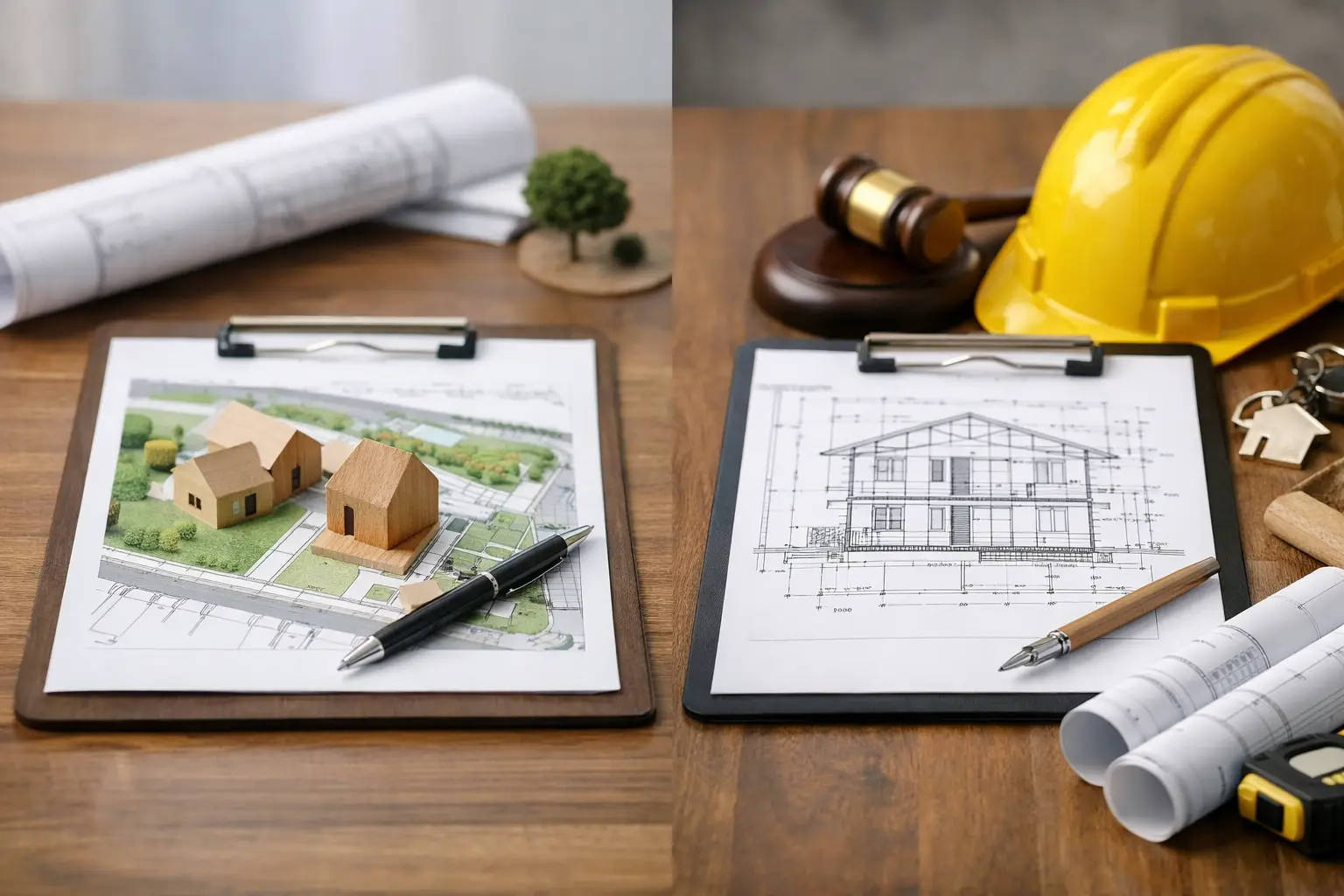
A lot of residential projects get delayed for one simple reason: people assume one permit covers everything. It does not. If you are trying to understand the difference between planning permit and building permit, the short answer is this – planning looks at whether your project is allowed on the property, and building looks at how the project will be built to code.
That sounds straightforward, but in real projects, the line between the two can feel blurry. Homeowners hear “approved plans” and think they are ready to build. Contractors get a green light from one department and expect permits to follow. Then plan check comments show up, zoning issues surface, and the schedule slips. Knowing which permit does what can save weeks of confusion.
What is the difference between planning permit and building permit?
A planning permit deals with land use, zoning, site constraints, and development standards. It answers questions like whether you can build an ADU in a certain location, how large an addition can be, whether setbacks are met, whether parking is required, and whether the project fits local rules for height, lot coverage, design, or neighborhood compatibility.
A building permit deals with code compliance and construction safety. It focuses on the actual work being done – structural framing, foundations, energy compliance, fire safety, electrical, plumbing, mechanical systems, and life-safety requirements. It answers whether the plans are detailed and compliant enough for legal construction.
In simple terms, planning asks, “Can this project be approved here?” Building asks, “Can this project be built this way?”
For many California residential projects, you may need both. For some, you may only need a building permit. The answer depends on the property, the scope, and the local jurisdiction.
Why the distinction matters before you draw plans
This is where homeowners and even experienced builders can lose time. If you move straight into construction drawings without confirming planning requirements, you may end up revising layouts, rooflines, setbacks, window placement, or building size after spending money on design.
Take a garage conversion or ADU as an example. A homeowner may assume the project is mostly an interior change, so it should be simple. But the planning side may still affect parking replacement rules, utility separation, lot coverage, rear and side setbacks, or occupancy limits depending on the city and the exact type of project.
The same thing happens with additions. From a construction standpoint, an addition may be structurally simple. From a planning standpoint, it may run into encroachment issues, floor-area limits, or height restrictions. If those are not resolved early, the building permit set can stall in review.
That is why permit strategy matters just as much as drafting. The goal is not just to produce plans. The goal is to produce the right plans for the approval path in front of you.
What a planning permit usually covers
Planning review is tied to local development rules. These rules vary by city and county, which is why the same project can be treated differently from one jurisdiction to the next.
In residential work, planning review often looks at zoning district requirements, setbacks, building height, lot coverage, floor area, parking, use classification, easements, access, design standards, and site layout. On some projects, planning may also review trees, slope, drainage, historic status, or neighborhood overlay rules.
Sometimes planning approval is simple and handled at the counter or through a basic zoning clearance. Other times it involves a formal application, a discretionary review, or public notice. That depends on the project type and the jurisdiction.
For homeowners, this is the part of the process that often feels the least predictable. Building codes are technical, but they are usually more objective. Planning review can involve interpretation, local policies, and project-specific constraints. That does not mean it is arbitrary. It means the site and the local rules matter a lot.
What a building permit usually covers
Once the project is allowed from a planning standpoint, the building permit process focuses on whether the drawings and engineering meet adopted codes.
That includes structural details, foundation design, framing, shear requirements, insulation, Title 24 energy documentation in California, smoke and carbon monoxide alarms, egress, fire separation, stairs, guardrails, and the layout of plumbing, mechanical, and electrical systems where applicable.
The building department also checks whether the plans are complete enough to review and inspect. Missing notes, inconsistent dimensions, unclear sections, or incomplete details can all slow approval, even when the basic design is acceptable.
This is why permit-ready drawings matter. A concept sketch may explain the idea, but it will not carry a project through plan check. Building review needs coordinated documents that show how the work will actually be constructed.
Do you always need both permits?
No, and that is where things depend on scope.
Some interior remodels may only require a building permit because the work does not change the building footprint, use, or site layout in a way that triggers planning review. A kitchen remodel, bathroom remodel, or interior reconfiguration may fall into that category, depending on the jurisdiction and the extent of the work.
On the other hand, projects like ADUs, additions, garage conversions, new custom homes, and many exterior alterations often involve planning review before or alongside building permit review. If you are changing setbacks, height, square footage, parking, or use, planning is much more likely to be involved.
There are also gray areas. A project that seems minor can trigger planning review if the property has unusual zoning, prior nonconforming conditions, easement conflicts, or neighborhood-specific standards. That is why assumptions are risky.
Common mistakes that cause permit delays
One common mistake is treating zoning research like an afterthought. If setback rules, lot coverage limits, or parking standards are not confirmed upfront, the design can head in the wrong direction from day one.
Another mistake is assuming a planning approval means you are ready to start construction. It does not. In most cases, planning approval is one step. You still need a building permit and approved construction documents before work begins.
A third issue is submitting plans that are technically drafted but not coordinated for permit review. The departments reviewing your project are looking for consistency. If the site plan says one thing, the floor plan shows another, and the elevations create a third condition, corrections are almost guaranteed.
There is also the timing problem. Some clients wait to ask permitting questions until they are committed to a layout or contractor pricing. By then, changing the design becomes more expensive and more frustrating.
How this plays out in California residential projects
In California, especially in active markets like the Roseville and Sacramento region, permit paths can move quickly or drag out depending on preparation. Local agencies each have their own submittal standards, review sequence, and correction process. State law may support a certain housing type, such as an ADU, but local implementation still affects what needs to be submitted and how the plans must be presented.
That is why local process knowledge matters. Two projects with the same square footage may not follow the same approval path if they are in different cities, on different lot types, or tied to different zoning conditions.
For contractors, this affects scheduling, subcontractor coordination, and client expectations. For homeowners, it affects budget, move-in timing, and whether a project feels manageable or overwhelming.
The best way to approach permits from the start
The most efficient path is to confirm planning constraints early, then build the drawing set around those constraints so the building permit package is accurate from the beginning.
That means looking at the property before finalizing the design, checking the local development standards, identifying likely review comments, and preparing plans that match the jurisdiction’s requirements. It also means being realistic. Sometimes the fastest route is not the biggest design or the first idea. Sometimes a slightly revised layout gets approved faster and with fewer corrections.
This is where an experienced permit consultant or drafting partner can make a real difference. JDFales Plans & Permits works with homeowners and contractors who want clear direction, permit-ready plans, and fewer surprises during review. When the planning side and the building side are coordinated from the start, projects move with a lot less friction.
If you are unsure which permit your project needs, that uncertainty is your signal to check before you invest further in design or construction planning. A short conversation at the right time can prevent a long delay later, and that is often the difference between a project that stalls and one that keeps moving.